Our Blog

Archive for Announcements

How Concrete Repair Works and When You Should Schedule It

Concrete surfaces around commercial properties take more punishment than most people realize. Between delivery traffic along Route 611, freeze-thaw cycles common in Bucks County, and daily foot traffic from tenants and customers, even well-installed concrete eventually shows wear. 

Understanding how concrete repair actually works and knowing when to schedule it helps property managers and facility teams in Warminster avoid safety issues, failed inspections, and costly full replacements. 

Below, we break down the repair process we use and the local signs that tell you it is time to act.

Key Takeaways

  • Concrete repair starts with a detailed assessment to match the method to the damage and site use.
  • Warminster’s climate and traffic patterns accelerate cracking, scaling, and joint failure.
  • Early scheduling reduces liability risks and avoids more disruptive full replacements.
  • Seasonal planning helps commercial properties control costs and downtime.

The Concrete Repair Process and Common Methods

Concrete repair is not a one-size-fits-all service. The right approach depends on damage type, load demands, and how the area is used at your Warminster commercial site.

Site Evaluation And Damage Assessment

Every repair starts with a detailed on-site evaluation. 

We review cracking patterns, surface scaling, joint failure, and signs of subbase movement in areas like loading docks, dumpster pads, and pedestrian walkways. 

In Warminster business parks and retail centers, we also consider traffic flow and access points off corridors like Street Road. 

This assessment determines whether the issue is cosmetic, structural, or related to drainage or soil movement, which is common in older developments across Bucks County.

Surface Preparation And Demolition

Proper preparation is critical for repair longevity. Damaged concrete is saw-cut to create clean edges, then removed down to sound material. 

In commercial settings, this often involves controlling dust and debris to keep nearby tenants operational. 

On sites with tight access or shared parking, we phase demolition to maintain ADA-compliant routes and safe entry points throughout the repair.

Crack Repair And Joint Restoration

Cracks and failed joints are common in Warminster due to repeated freeze-thaw cycles and winter deicing chemicals. 

Depending on severity, repairs may involve epoxy injection, routing and sealing, or full joint reconstruction. 

Restoring joints allows slabs to expand and contract without transferring stress, which is essential for high-traffic areas like service drives and delivery lanes.

Partial-Depth And Full-Depth Repairs

When surface damage extends deeper, partial-depth repairs remove only the top portion of the slab, while full-depth repairs replace concrete down to the base. 

Full-depth repairs are often necessary for loading zones or areas supporting heavy trucks common near industrial properties along Jacksonville Road. 

Choosing the right depth prevents repeat failures and protects the surrounding pavement.

Concrete Placement And Finishing

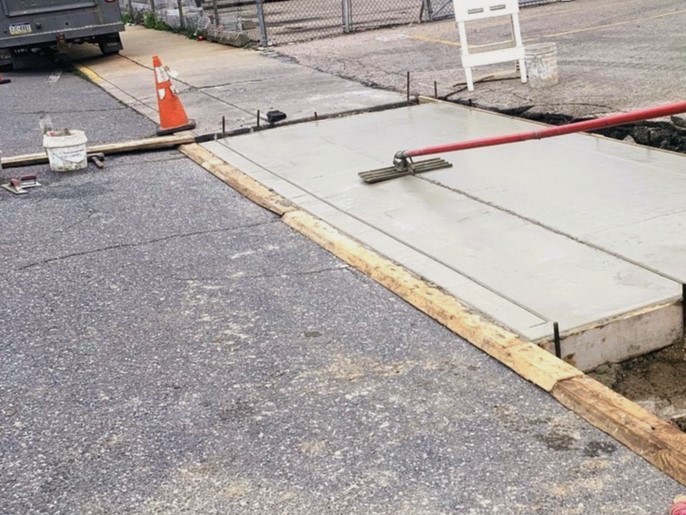
Once prepared, new concrete is placed using mixes suited for commercial use and local climate conditions. 

Finishing techniques are selected based on function, whether that is broom finishes for slip resistance on walkways or smooth finishes for interior slabs. 

In Warminster, attention to slope and drainage is essential to prevent ponding that can lead to icing and accelerated deterioration.

Curing, Protection, And Return To Service

Curing is often overlooked but directly impacts durability. 

We apply curing methods that account for seasonal temperatures, especially during cooler spring and fall months in southeastern Pennsylvania. 

Traffic is reintroduced in stages, coordinated with property managers to minimize disruption while ensuring the repair reaches proper strength.

Signs and Timing Considerations for Scheduling Concrete Repair in Warminster, PA

Knowing when to schedule repairs is just as important as understanding how they are performed. Timing affects cost, safety, and compliance for commercial properties.

Widening Cracks And Uneven Surfaces

Cracks that continue to widen or slabs that become uneven are early warnings of underlying issues. 

In commercial plazas around Warminster Heights or older office complexes, these conditions often point to subbase settlement. 

Left unaddressed, they create trip hazards and can trigger liability concerns, especially in high-visibility pedestrian areas.

Spalling, Scaling, And Surface Deterioration

Surface flaking and pitting are common after harsh winters. Road salt tracked in from parking areas accelerates scaling, particularly on sidewalks and entry aprons. 

Scheduling repairs early prevents moisture intrusion that can compromise reinforcement and lead to larger structural failures.

Drainage Problems And Standing Water

Concrete that no longer drains properly is more than an inconvenience. Standing water near entrances or loading areas can violate accessibility standards and increase slip risk. 

In Warminster, where seasonal storms can be intense, addressing drainage-related concrete issues before summer helps prevent rapid deterioration during heavy rainfall events.

Failed Inspections And Compliance Concerns

Municipal inspections and insurance reviews often flag deteriorated concrete. 

Uneven sidewalks, broken curbs, and damaged ramps can create compliance issues related to ADA accessibility. 

Addressing repairs proactively helps commercial property owners stay ahead of inspection schedules and avoid rushed, higher-cost work.

Seasonal Timing And Weather Windows

Concrete repair is most efficient during moderate temperatures. 

Spring through early fall provides ideal conditions in Warminster, allowing proper curing and a faster return to service. 

Emergency repairs can be completed year-round, but planned maintenance during favorable seasons reduces risk and cost while improving long-term performance.

Operational Disruptions And Tenant Complaints

Tenant feedback is often the first indicator of a problem. Complaints about pooling water, rough surfaces, or safety concerns should prompt an evaluation. 

Scheduling repairs during off-peak hours or phasing them around tenant operations helps maintain uptime, a key priority for commercial properties in busy retail and office corridors.

Schedule A Commercial Concrete Repair Evaluation

Delaying concrete repair almost always leads to higher costs and greater disruption. 

At Associated Paving Contractors, Inc. (APCON), we help Warminster commercial property owners understand what is happening beneath the surface and plan repairs that align with operational needs. 

Addressing issues early protects safety, maintains compliance, and extends the life of your concrete assets. Reach out to schedule a site walkthrough and get a clear scope and timeline before minor damage becomes a major capital expense.

Frequently Asked Questions

How long does commercial concrete repair usually take at our Warminster property?

Timelines depend on repair depth and square footage, but most partial-depth repairs are completed within one to three days, including curing time before reopening to traffic. Larger full-depth repairs may require additional days and coordination with local access and safety requirements.

What permits or approvals are typically needed for concrete repair in Warminster?

Work impacting sidewalks, curbs, or public access areas may require coordination with local municipal offices in Bucks County. APCON reviews the scope early to identify any permitting or inspection requirements tied to accessibility or right-of-way impacts.

Can repairs be phased to keep our business operational?

Phased scheduling is common for retail centers and office parks along major corridors like Street Road. Repairs can be staged by zone, allowing continued access for tenants, deliveries, and customers while maintaining safety controls.

What materials are used to ensure durability in local conditions?

Commercial-grade concrete mixes, joint materials, and sealants are selected based on load demands and southeastern Pennsylvania weather patterns. Proper curing and joint design help withstand freeze-thaw cycles and deicing exposure common in Warminster.
Paving and Striping Improvements at Montgomery Square in Montgomeryville, PA

Fresh pavement has a way of changing how a property feels the moment you turn in.

At Montgomery Square in Montgomeryville, PA, that first impression mattered. The internal roadways and circulation lanes serve a steady mix of shoppers, delivery vehicles, and pedestrians every day. The goal of our team at Associated Paving Contractors, Inc. (APCON) was to create a smoother driving experience while bringing clarity and order back to the pavement layout.

Setting the Stage at Montgomery Square

Montgomery Square sits in a busy commercial pocket of Montgomeryville. Like many suburban shopping centers in the area, it relies on internal access roads to keep traffic moving safely between storefronts, parking areas, and entrances.

Over time, those surfaces take a beating.

Faded striping, worn asphalt, and unclear traffic patterns can quickly lead to confusion, especially around curves, intersections, and pedestrian crossings.

We were brought in to handle asphalt paving and pavement striping across key sections of the property. The focus stayed on improving function while elevating the overall appearance of the site.

A Closer Look at the Work Performed

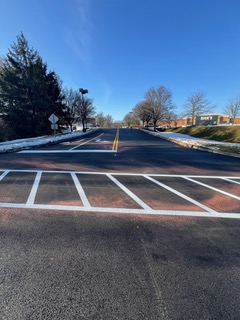
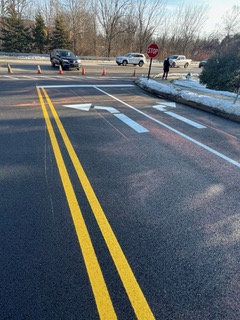
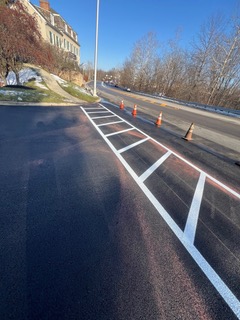
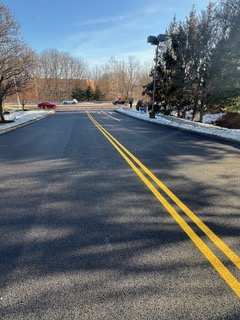
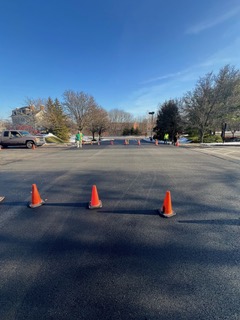
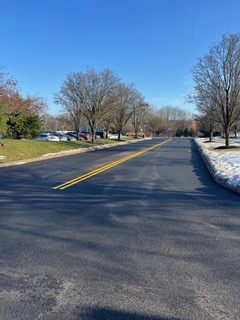
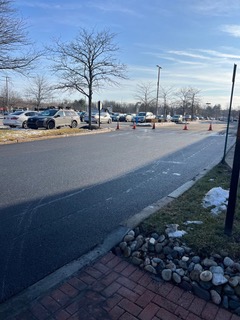
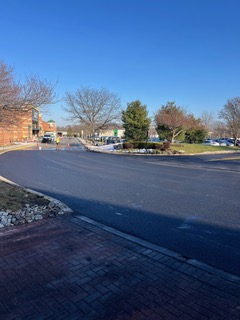
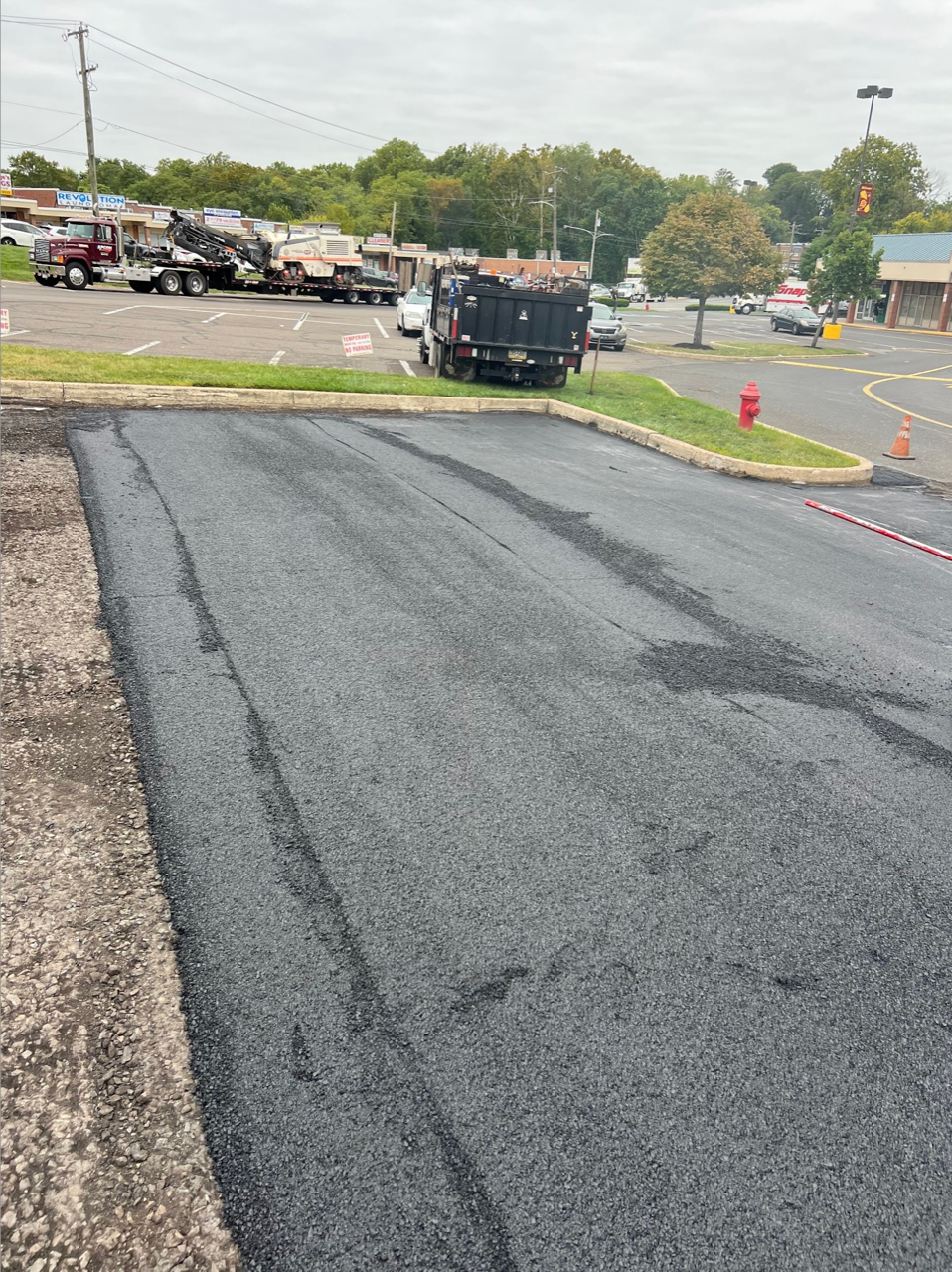
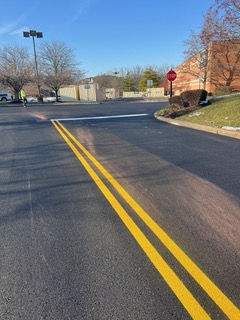
The photos from this project show newly paved asphalt roadways throughout Montgomery Square. Both straight runs and curved sections received fresh asphalt, resulting in smooth, uniform surfaces that reset the foundation for long-term performance.

Once paving was complete, we moved into striping and layout work. Clear pavement markings play a major role in how drivers and pedestrians navigate a commercial property.

For this site, that meant:

  • Double yellow centerlines to separate opposing traffic
  • White directional arrows to guide vehicle movement
  • Stop bars positioned near intersections and stop signs
  • High-visibility pedestrian crossing markings
  • Diagonal striping to define buffer zones and restricted areas near intersections and curbing

Each marking was placed with existing sidewalks, landscaped islands, and curbs in mind. Precision mattered, especially around curved sections where poor alignment can throw off traffic flow.

Working Within an Active Commercial Property

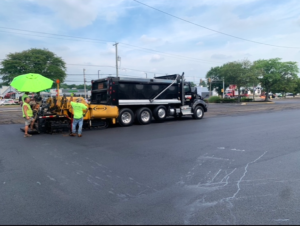
One of the challenges on projects like this involves maintaining safety and organization while work takes place in an active shopping center. Traffic cones and controlled work zones allowed paving and striping to move forward without disrupting normal access more than necessary.

Seasonal conditions were also part of the picture.

Bare trees and small snow piles near curbs point to colder weather, which makes clean paving execution and durable striping even more important. Timing and surface preparation helped ensure the finished product looked sharp and performed as intended.

The Results for Montgomery Square

The finished pavement now delivers a noticeably smoother ride throughout the property. Clear lane separation and directional markings reduce guesswork for drivers, while defined pedestrian areas improve safety near crossings and intersections.

Visually, the contrast between the fresh black asphalt and crisp striping gives Montgomery Square a cleaner, more organized appearance. For a retail environment, that visual upgrade supports both tenant confidence and customer experience.

Serving Commercial Properties Across Montgomeryville, PA

Projects like this reflect the needs we see throughout Montgomeryville and the surrounding area. Commercial properties depend on pavement that works hard every day and communicates clearly to everyone using it.

If you manage or own a commercial property in Montgomeryville and are seeing worn asphalt or faded markings, now is the right time to act.

Reach out to schedule a site visit at your property, discuss paving or striping needs, and get a clear plan in place before traffic patterns become a problem.

A Cleaner, Safer Parking Lot Upgrade for Boulevard Plaza in Philadelphia

Fresh pavement changes how a property feels the moment drivers pull in.

At Boulevard Plaza in Philadelphia, PA, that impact mattered.

The plaza needed a parking area that looked sharp, functioned smoothly, and met accessibility expectations for a busy commercial setting. Our team at Associated Paving Contractors, Inc. (APCON) was brought in to handle the paving and striping work that would bring the lot back into clear order.

From the start, our focus stayed on creating a clean, durable surface and well-defined parking layout that works for tenants and visitors alike. Boulevard Plaza sees steady vehicle traffic, so clarity and organization were key priorities throughout the project.

Setting the Stage at Boulevard Plaza

Boulevard Plaza sits in a dense, urban part of Philadelphia, surrounded by active roadways and neighboring commercial buildings. Parking efficiency plays a direct role in how easily customers can access the businesses on site. Before our work, the asphalt surface required renewal, and the lot lacked visible, up-to-date markings to guide drivers and pedestrians.

Our team approached the site with a clear goal. Deliver a smooth blacktop surface and restore parking structure through precise striping that supports daily use and long-term durability.

Our Paving and Striping Process

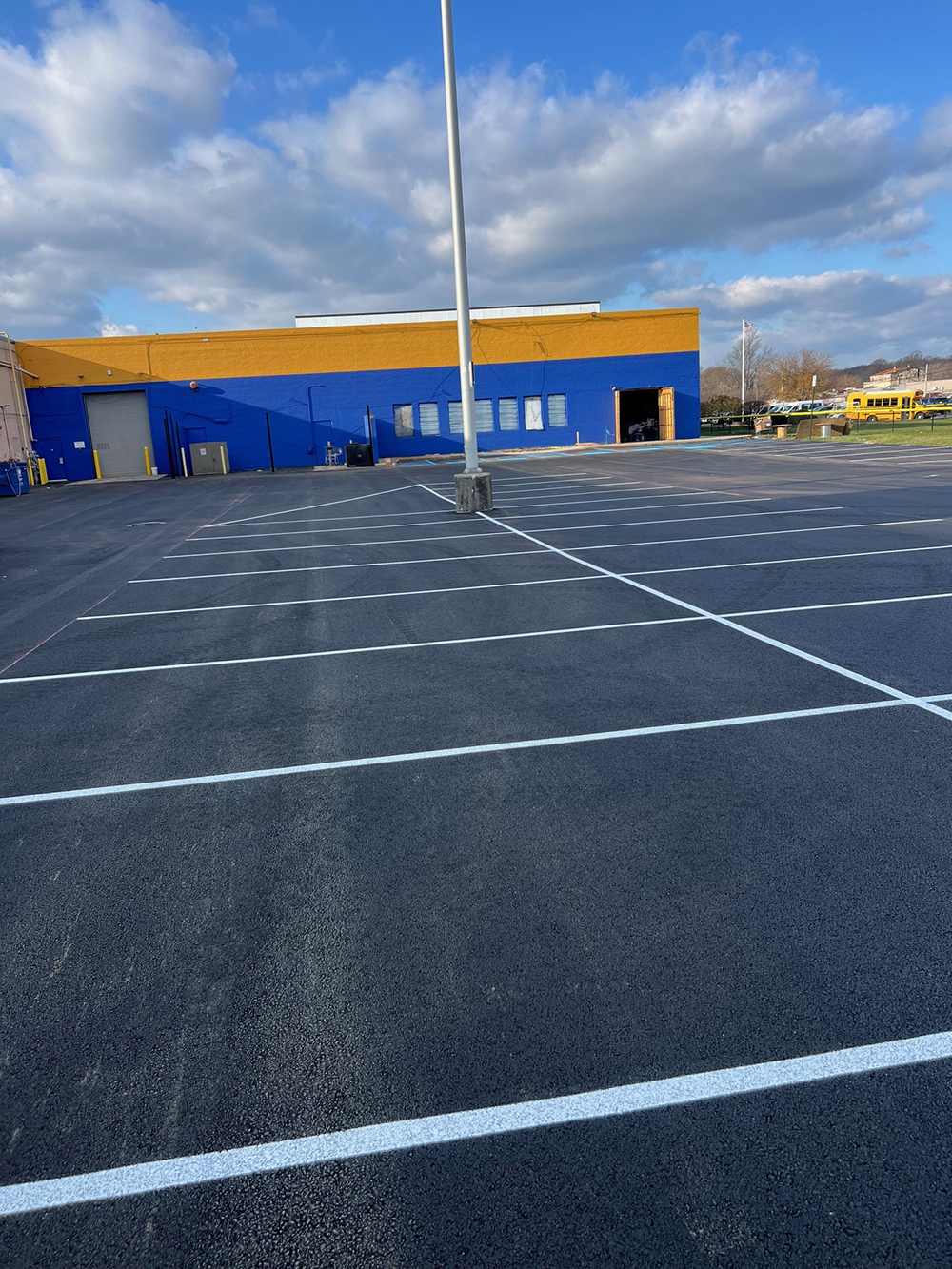
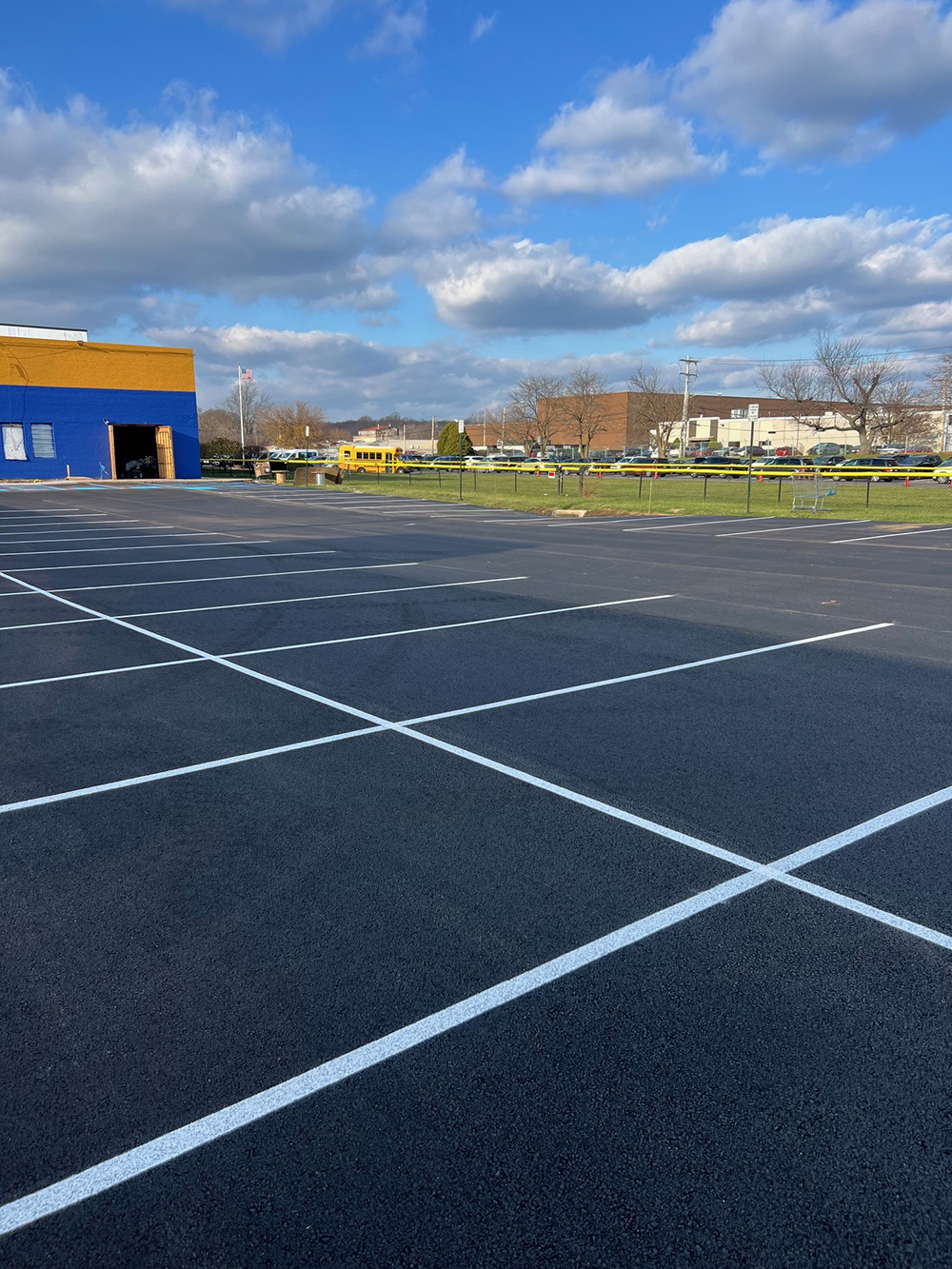
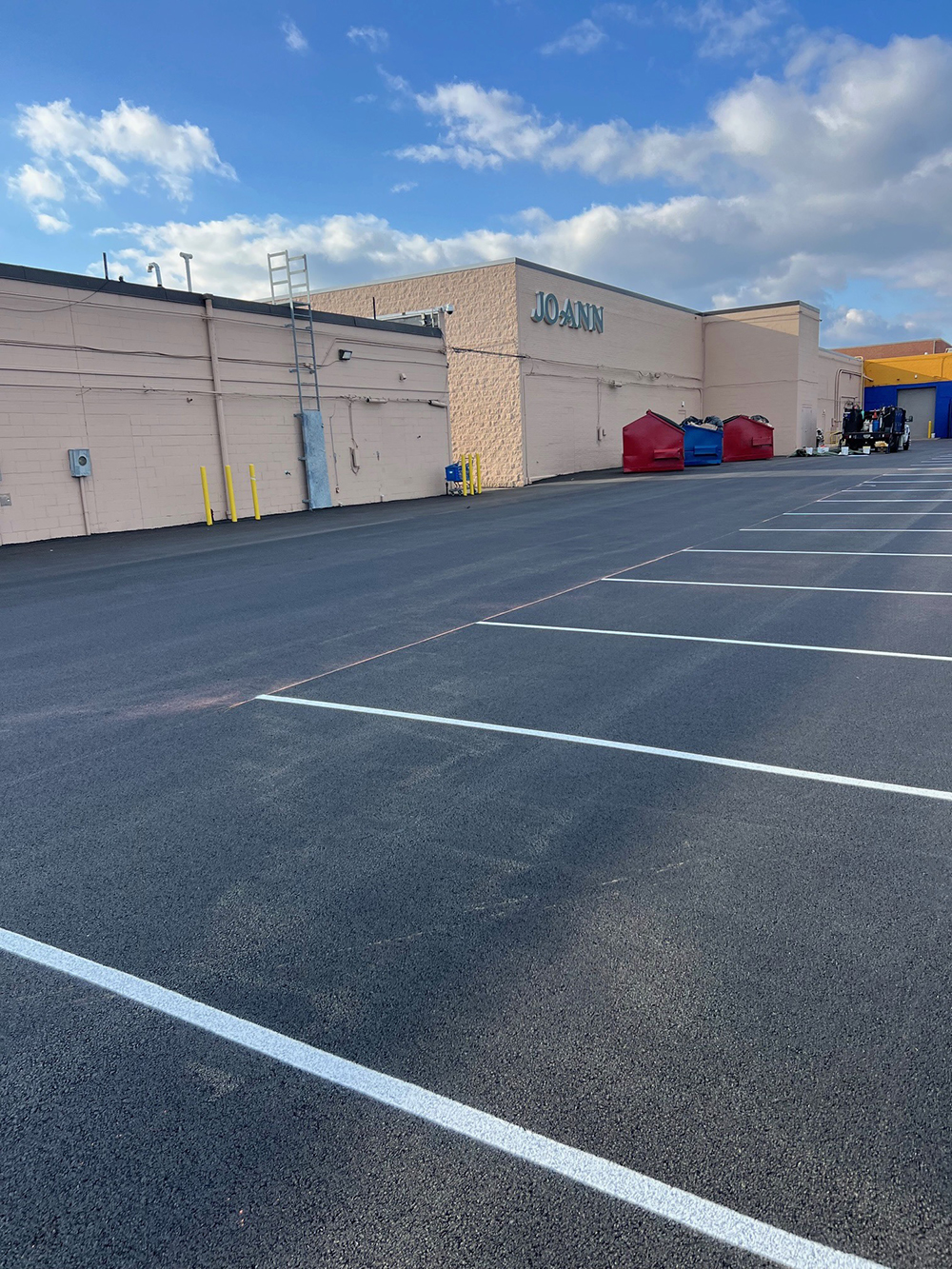
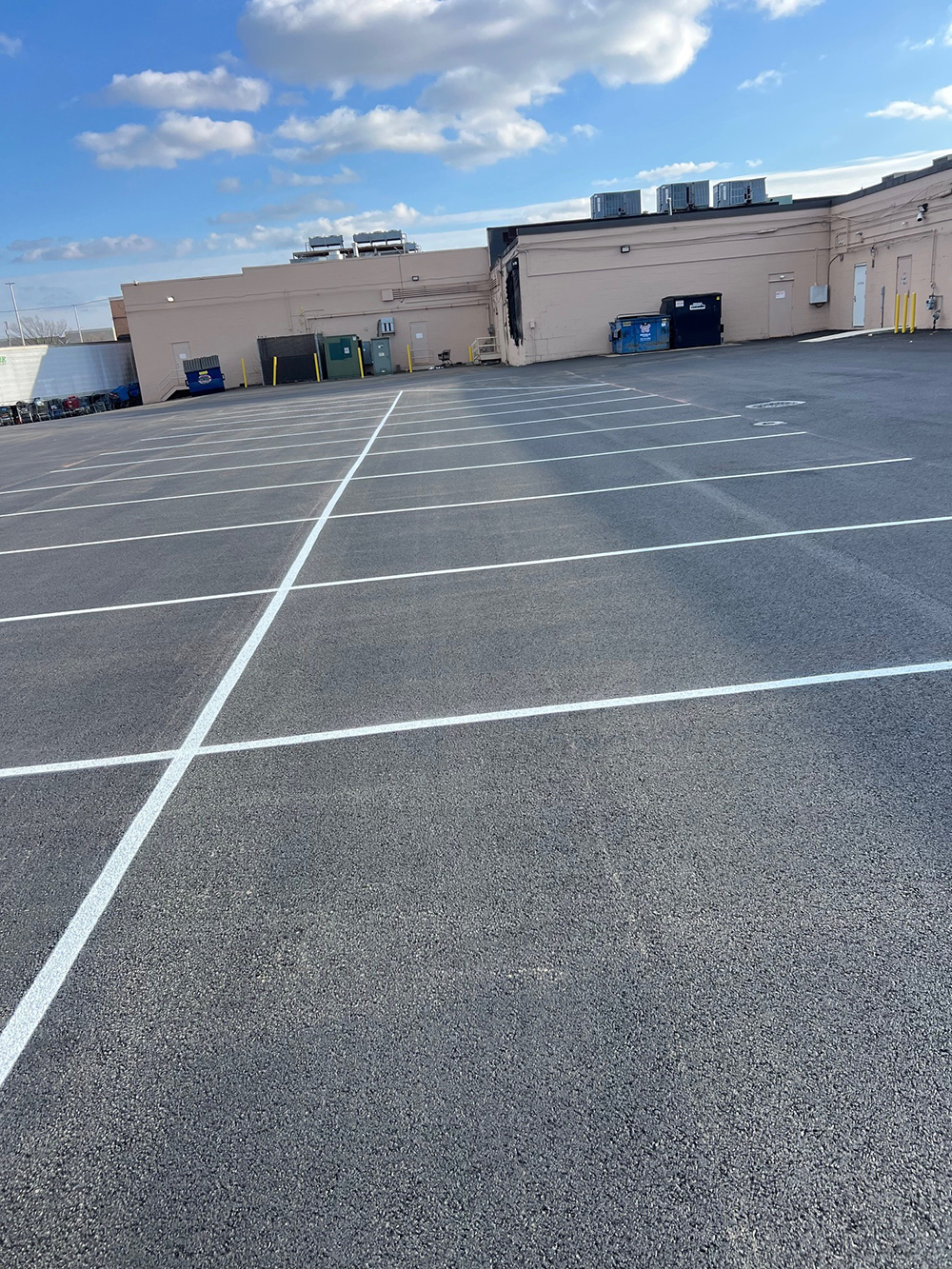
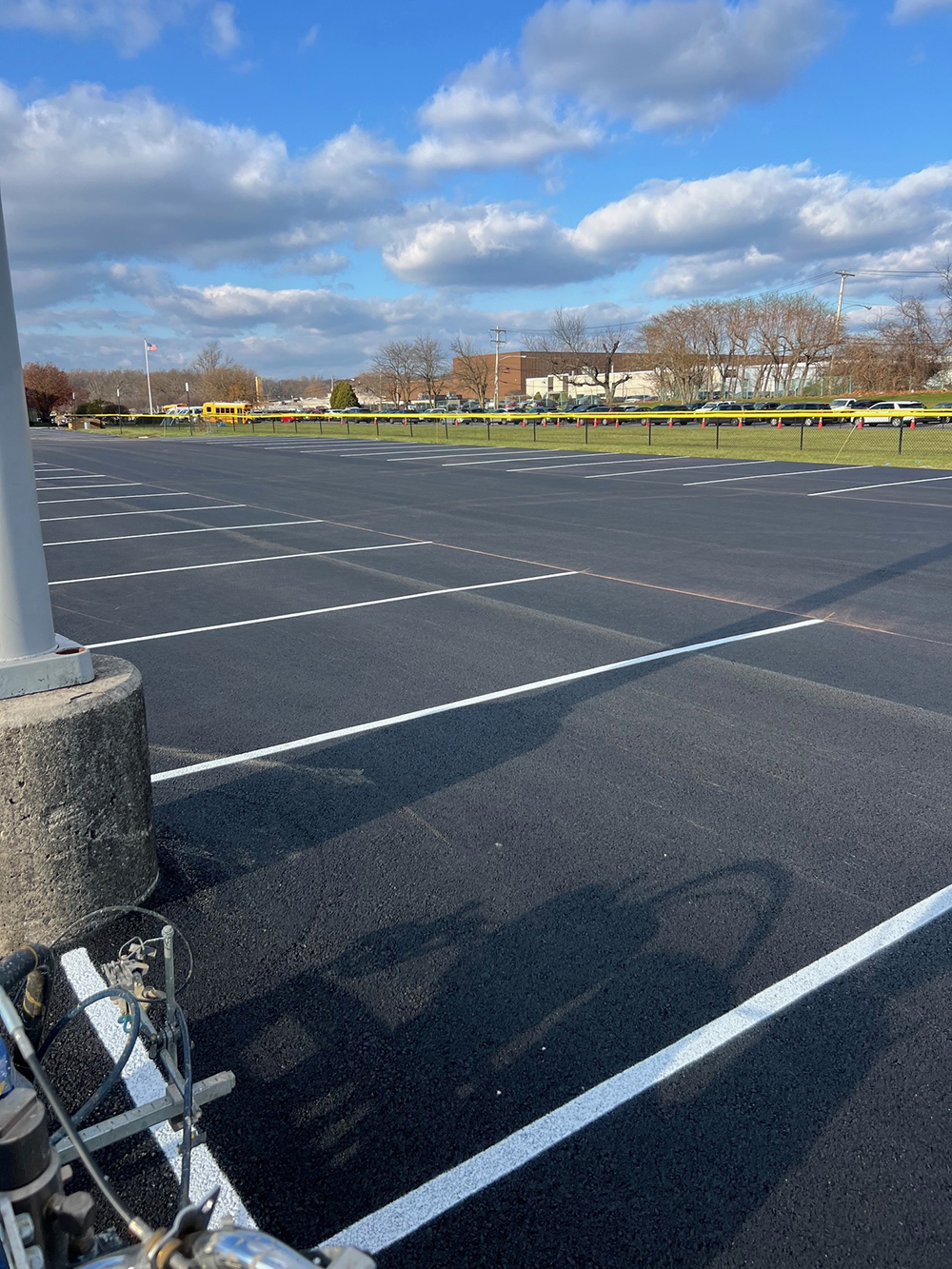
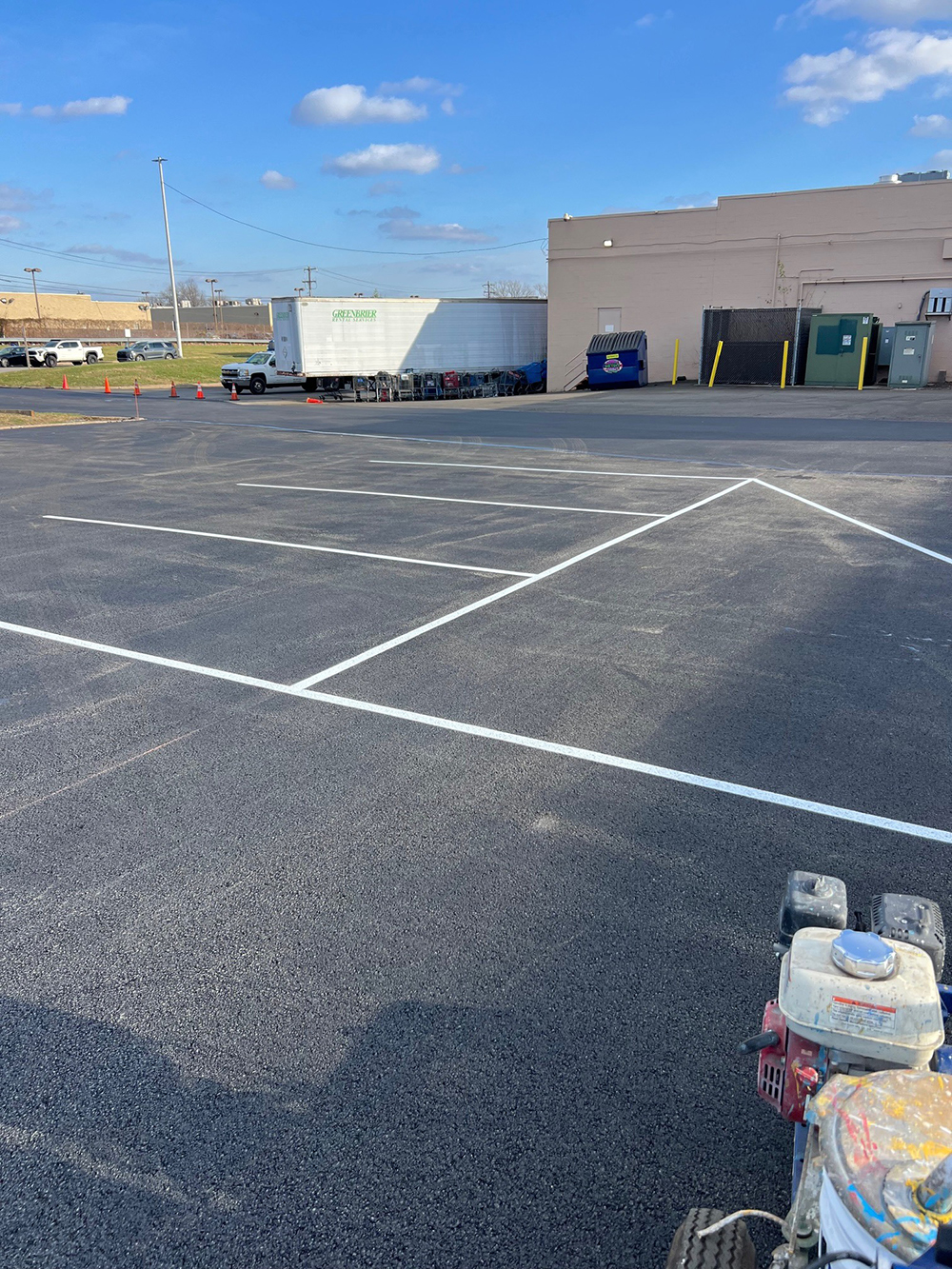
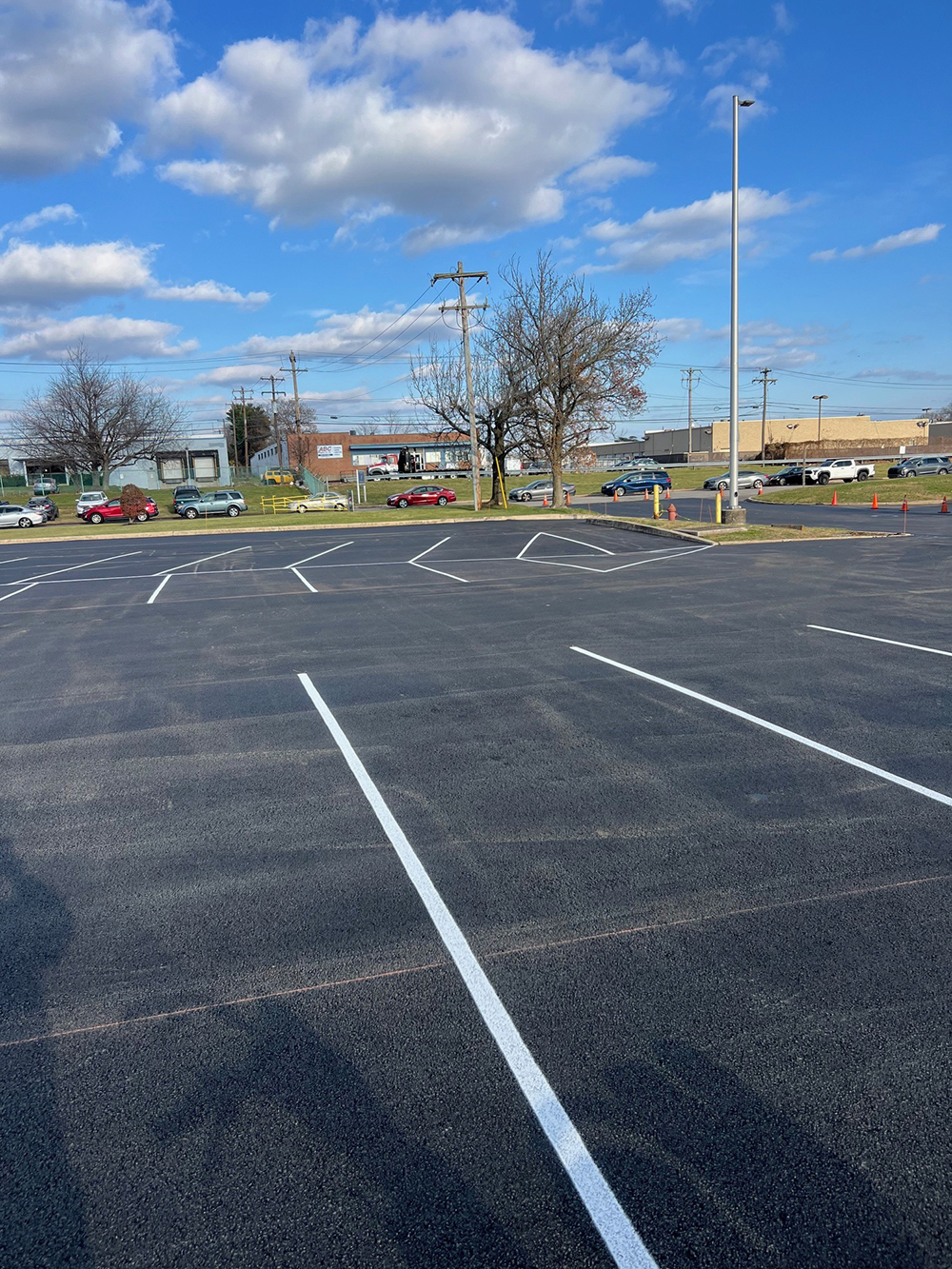
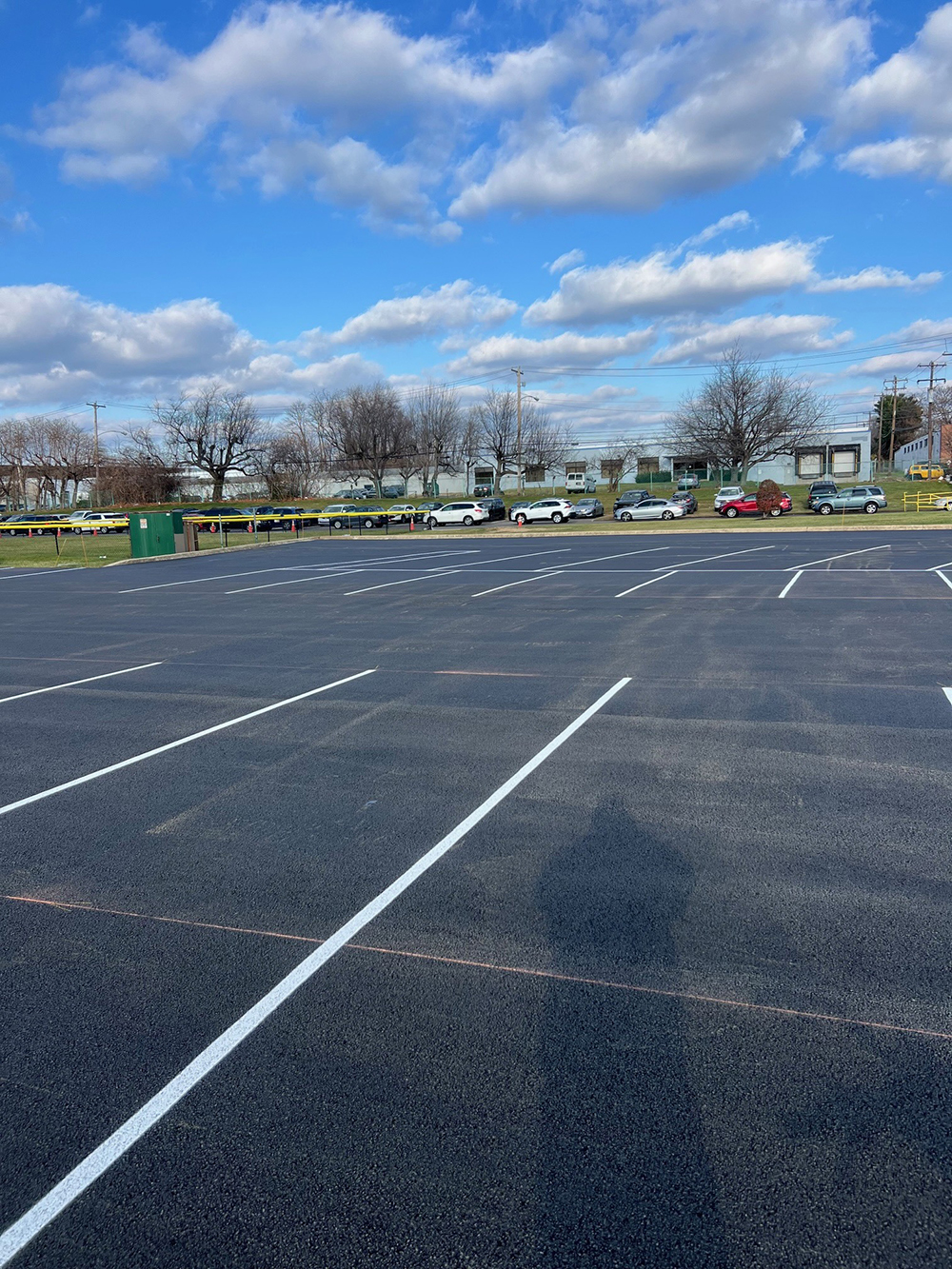
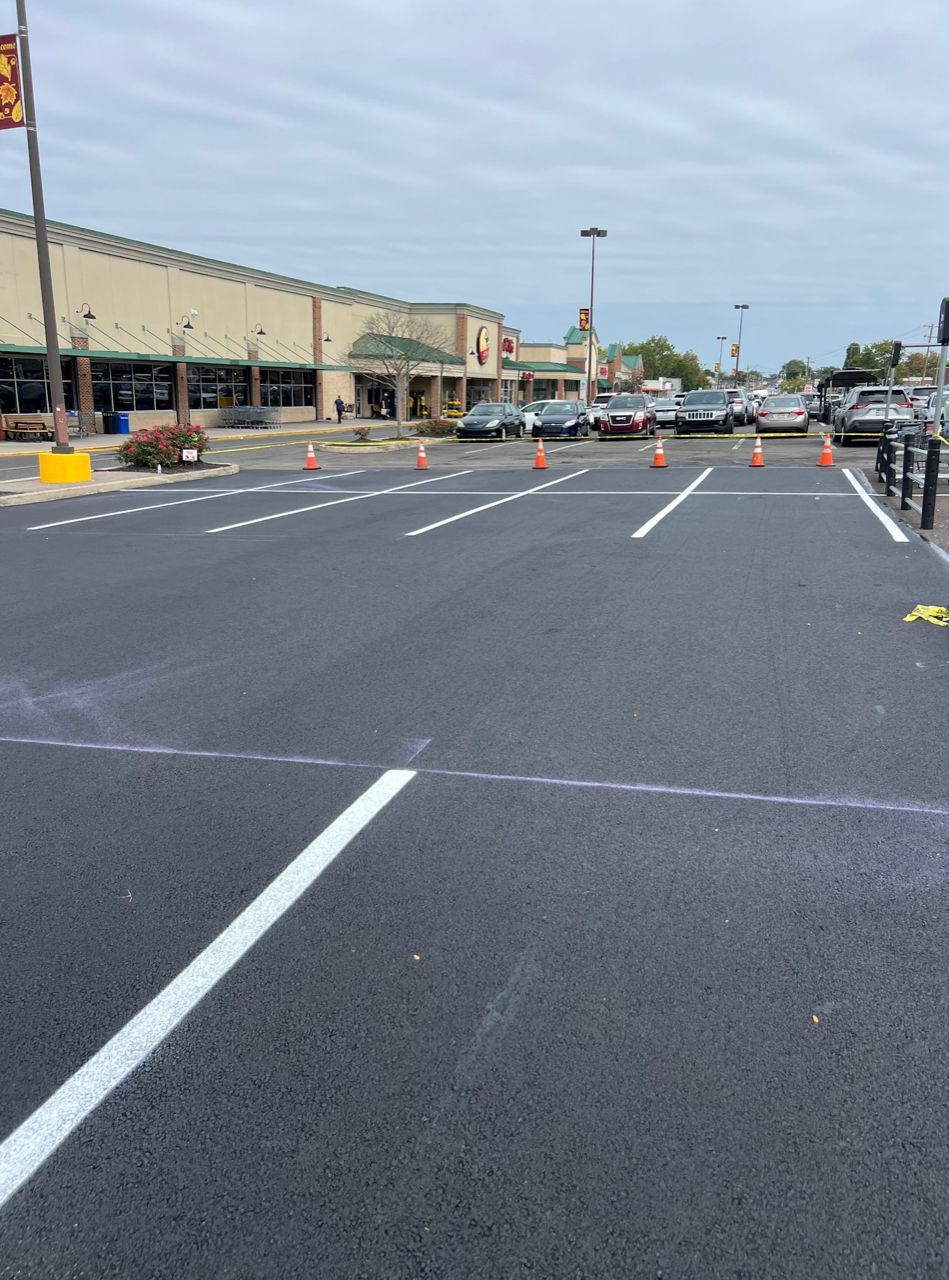
We began by completing the asphalt paving across a large section of the parking lot. The finished surface presents a uniform, deep black appearance that signals new construction and provides a strong foundation for markings. A properly paved surface supports drainage, resists premature wear, and sets the tone for everything that follows.

Once paving was complete, we moved into striping.

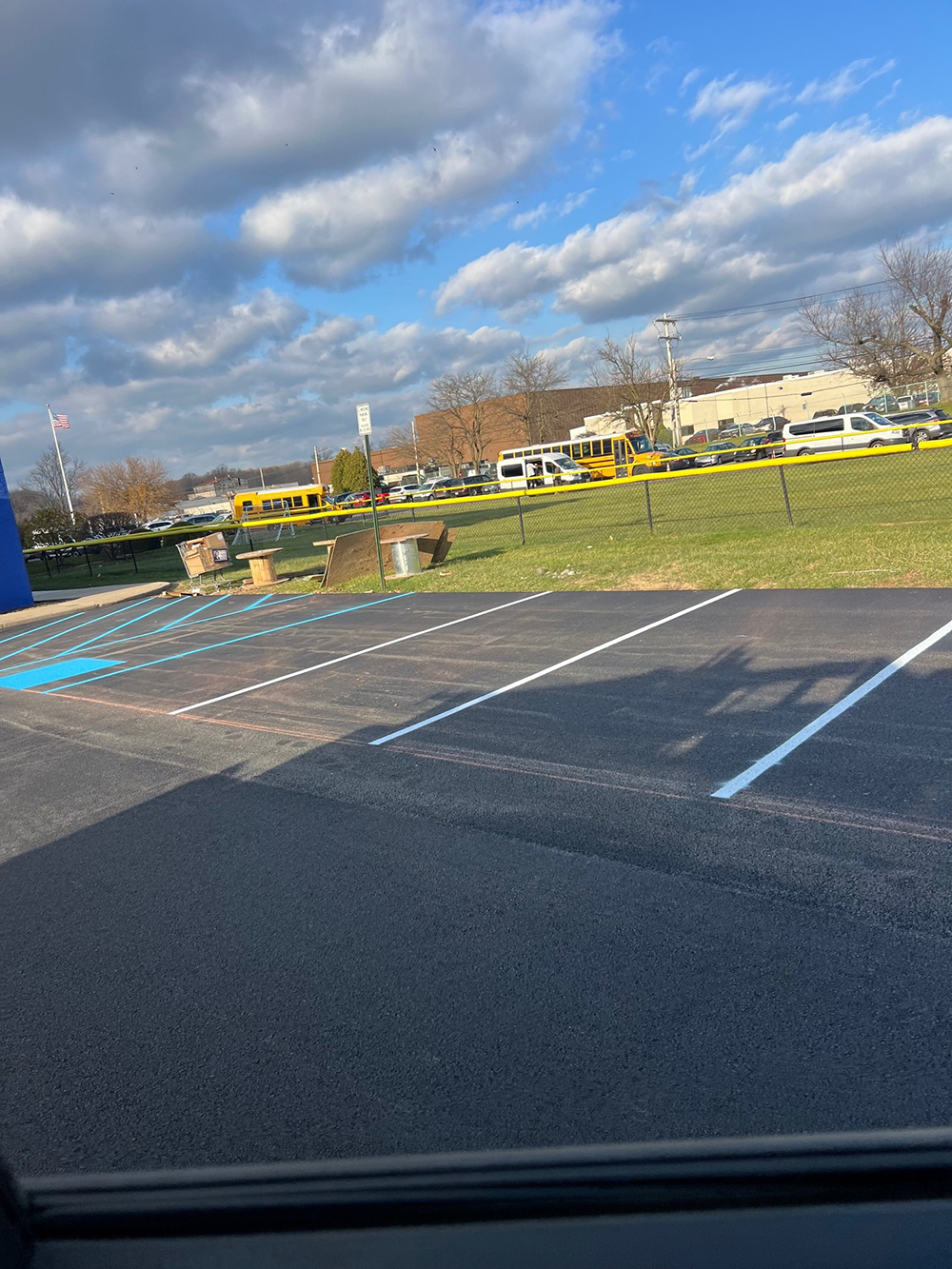
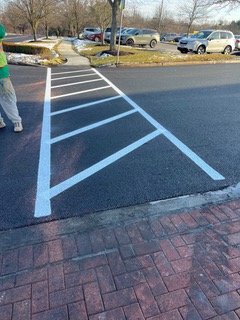
Using high-visibility white paint, we laid out standard parking stalls with consistent spacing and straight alignment. Clear lines reduce confusion and help maximize the number of usable spaces without crowding the lot.

Accessibility played an important role in this layout.

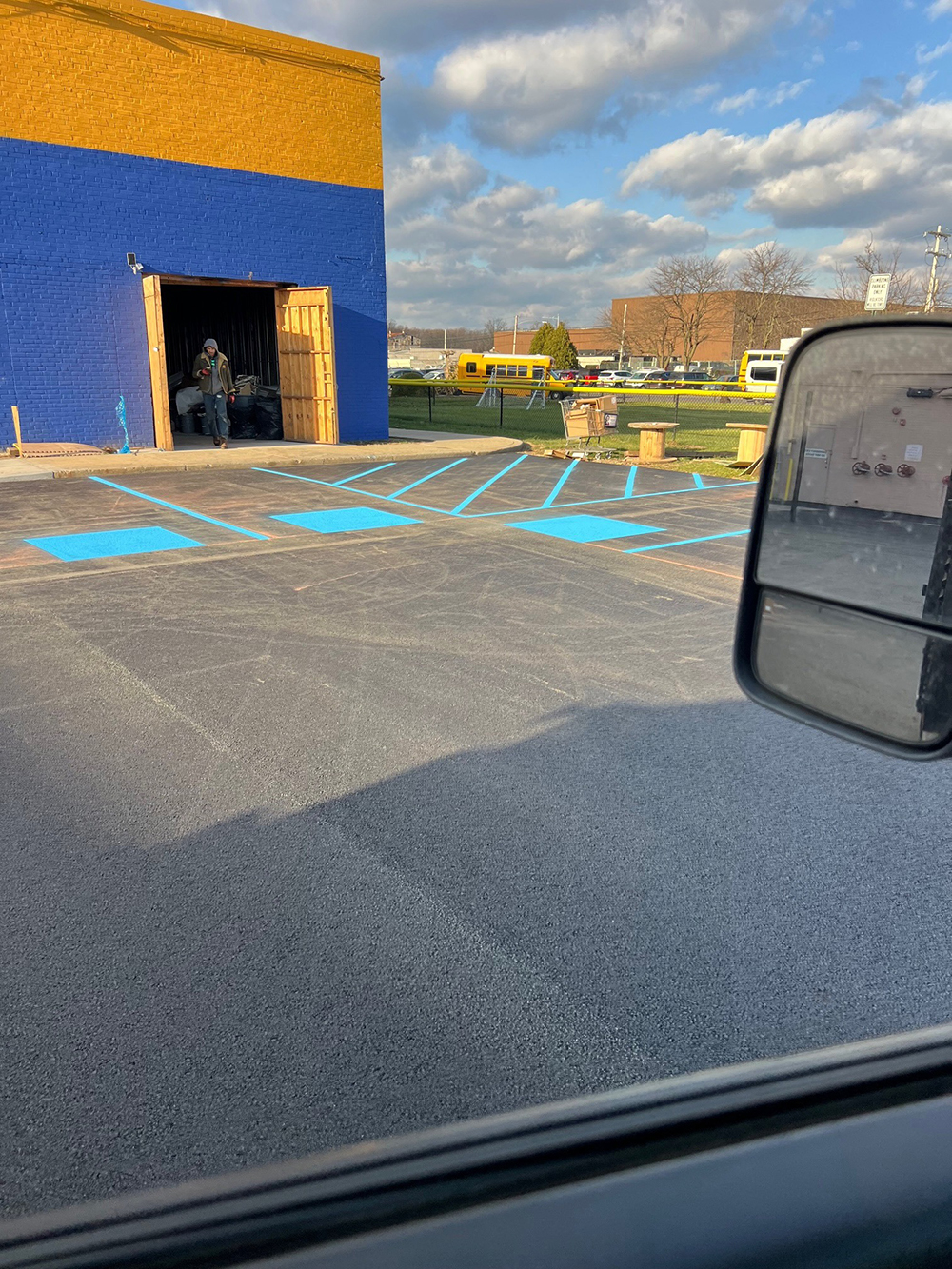
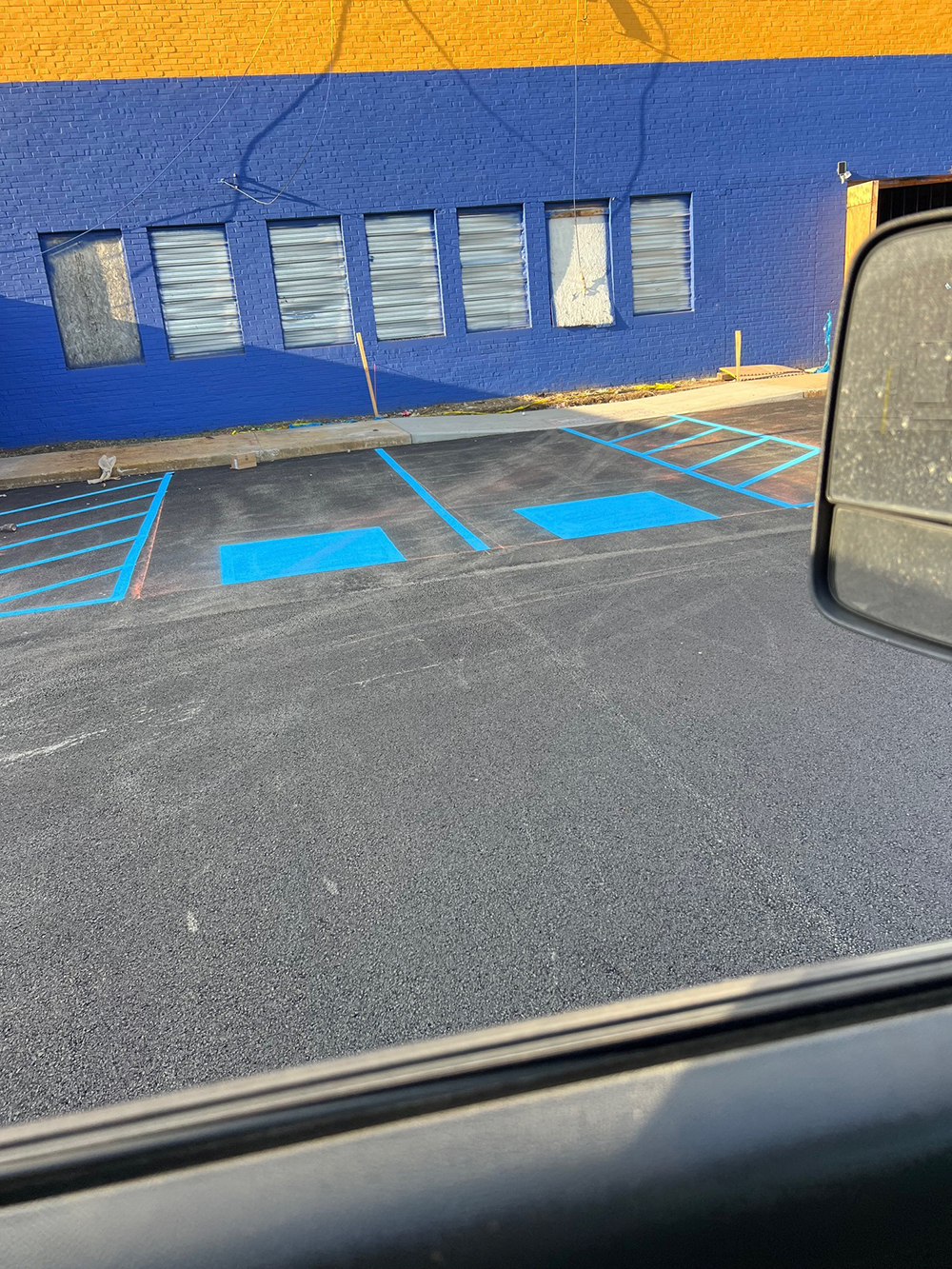
We striped ADA-compliant accessible parking spaces using blue paint, including adjacent access aisles with diagonal markings. These spaces sit close to the building, providing safer and more convenient access for visitors who need it.

Designed for a Busy Philadelphia Plaza

Commercial properties in Philadelphia demand parking solutions that handle frequent turnover and varied vehicle sizes. At Boulevard Plaza, the striping layout supports smooth traffic flow while maintaining clear pedestrian areas near the storefronts. The combination of fresh asphalt and crisp markings improves safety during peak hours and helps drivers navigate the lot with confidence.

Working next to an existing building also required careful coordination. Our crew completed the paving and striping without disrupting the structure or surrounding features, keeping the focus on efficiency and precision.

The Finished Result

The completed parking lot now offers a polished, organized appearance that reflects well on the entire plaza. Bright white stall lines contrast clearly against the new asphalt, while blue accessible spaces stand out for immediate visibility. The result supports compliance needs and enhances everyday usability for customers and tenants.

Beyond appearance, the work delivers practical value.

Drivers know where to park, pedestrians know where to walk, and property managers gain a lot that feels easier to manage and maintain.

Serving Commercial Properties Across Philadelphia

Projects like Boulevard Plaza highlight how professional paving and striping can elevate a commercial site. In a city like Philadelphia, where first impressions and accessibility both matter, investing in clear, durable parking infrastructure pays off every day.

If you manage or own a commercial property in Philadelphia and need asphalt paving or parking lot striping, we are ready to help. Reach out to schedule a site visit at your property, discuss your goals, and get a clear plan for improving your parking areas with work built to last.

Why You Should Address Minor Damage With Concrete Repair Before It Spreads

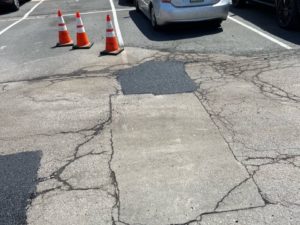
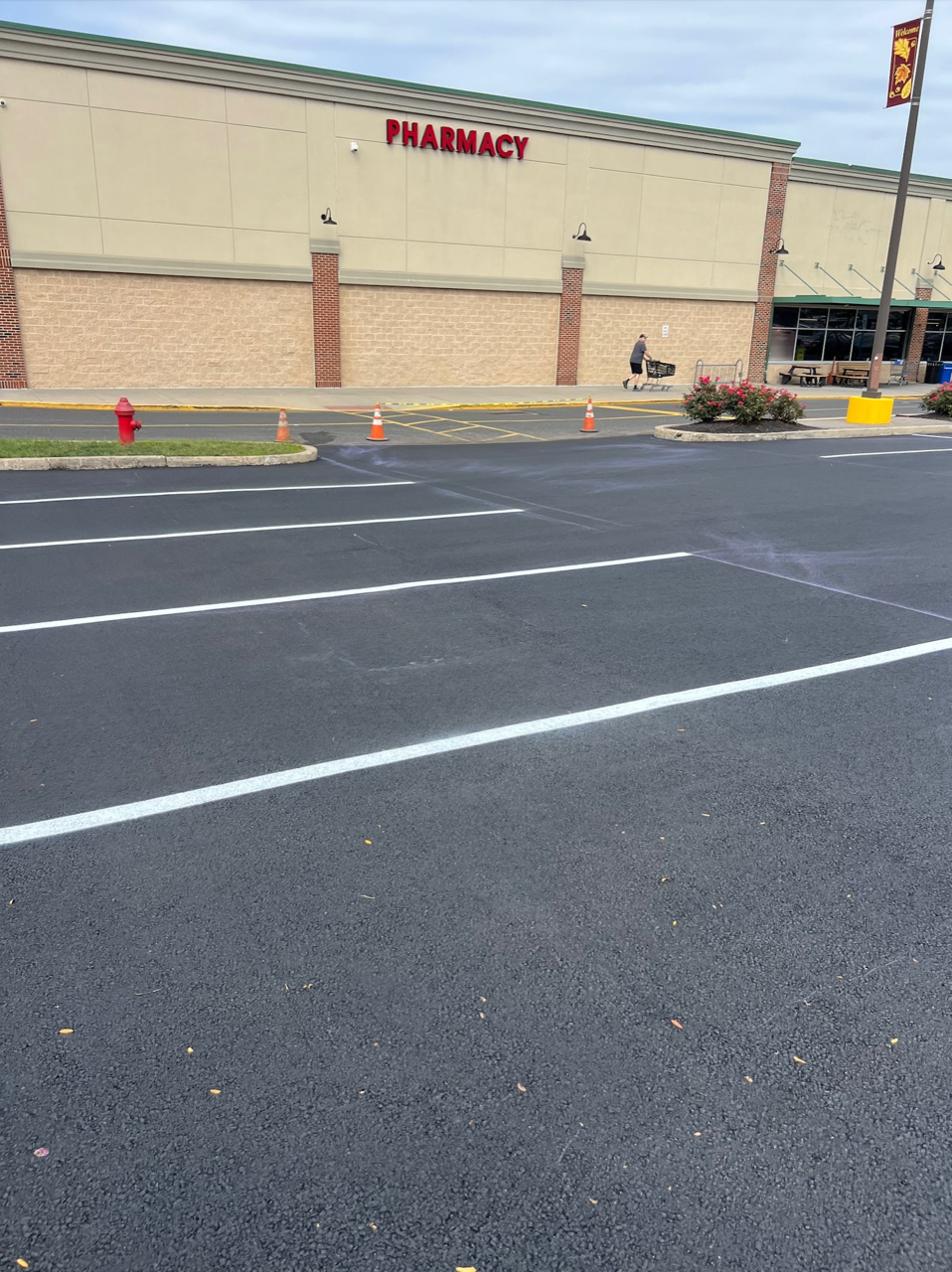
concrete pavingSmall cracks, surface scaling, and joint separation show up fast on commercial properties in Warminster, especially after freeze-thaw cycles and heavy truck traffic near Route 611 and Jacksonville Road. Those issues may look cosmetic at first, but they rarely stay that way. Addressing minor concrete damage early keeps costs predictable, limits downtime, and protects how your property functions and looks to tenants, customers, and inspectors.
Below, we explain why early concrete repair matters for commercial sites and when it makes sense to bring in a professional crew before damage spreads.

Key Takeaways

  • Minor concrete damage allows water and load stress to accelerate structural failure.
  • Early concrete repair reduces liability and limits disruption to commercial operations.
  • Reappearing cracks and spalling signal deeper issues that need professional repair.
  • Proactive repairs cost less than large-scale replacement on commercial sites.

Water Intrusion Accelerates Structural Breakdown

Cracks and small surface defects allow water to seep below the slab, which is a major problem in Bucks County, where winter freeze-thaw cycles are common. Once moisture penetrates the concrete, it expands during freezing temperatures and widens cracks from the inside out.

On commercial lots near industrial parks off Street Road, this often leads to subbase erosion that compromises load-bearing capacity. Early crack sealing or patching blocks that water path before the damage reaches the base layers.

A simple repair now helps avoid slab replacement later.

Minor Damage Quickly Becomes a Safety Liability

Uneven panels, spalling edges, and small potholes create trip hazards for employees and customers moving between parking areas and building entrances.

Commercial properties near shopping centers or medical offices in Warminster see constant foot traffic, which increases exposure to claims.

Once an injury occurs, documentation often shows the defect existed well before the incident. Proactive concrete repair reduces liability and supports safer site conditions year-round.

Fixing minor damage early is a practical way to limit risk.

Heavy Commercial Loads Exploit Weak Points

Delivery trucks, trash dumpsters, and service vehicles put concentrated stress on already damaged concrete. Areas like loading docks and service drives behind retail buildings take repeated impact that turns hairline cracks into full-depth failures.

When minor damage is ignored, weight transfers unevenly and accelerates panel movement. Targeted repairs reinforce those weak points before loads cause widespread deterioration.

Early intervention keeps operational areas functional.

Repairs Are Less Disruptive When Done Early

Small-scale concrete repairs can often be completed quickly with limited impact on parking or access. Once damage spreads, repairs take longer and require larger work zones that disrupt tenants and operations.

Properties near Warminster Industrial Park often rely on tight delivery schedules that cannot accommodate extended closures. Addressing issues early allows for phased work and easier scheduling.

That flexibility disappears when damage becomes extensive.

Property Appearance and Compliance Matter

Cracked and deteriorating concrete reflects poorly on commercial properties, especially those competing for tenants along major corridors like York Road. Municipal inspections, ADA considerations, and lease requirements often reference pavement and walkway conditions.

Minor damage left unattended can trigger compliance issues during routine inspections. Early concrete repair helps maintain a professional appearance and supports regulatory expectations. It also protects property value over time.

When to Seek Professional Concrete Repair to Prevent Costly Repairs

Certain conditions signal that minor damage needs professional attention to prevent larger, more expensive failures.

Cracks That Widen or Reappear After Patching

Hairline cracks that continue to widen or return after basic patching often indicate movement below the slab. This is common on older commercial sites in Warminster, built over variable soils or areas with poor drainage.

Repeated cracking suggests the issue goes beyond surface wear. Professional repair addresses underlying causes such as joint failure or base instability. Ignoring these signs leads to full slab replacement.

Surface Spalling in High-Traffic Areas

Spalling occurs when the concrete surface flakes or chips away, often from deicing chemicals and moisture exposure. On commercial parking lots and sidewalks near office buildings, spalling reduces traction and exposes aggregate.

If left untreated, it spreads quickly across the slab surface.

Professional repair restores the surface before deeper deterioration sets in. Early treatment extends the usable life of the concrete.

Joint Deterioration and Sealant Failure

Control and expansion joints are designed to manage movement, but failing sealant allows water and debris to infiltrate. In Warminster, clogged joints are common after fall leaf buildup and winter snow removal.

Once joints fail, adjacent panels begin to shift and crack.

Professional joint repair and resealing prevents that movement from spreading across the pavement. This work is far less costly than panel replacement.

Settling or Uneven Panels

Concrete panels that settle or lift create drainage issues and trip hazards, especially near entrances and crosswalks.

These conditions often appear minor at first but worsen with each storm.

On commercial sites with poor runoff management, water pooling accelerates erosion under the slab. Professional repair corrects elevation issues before surrounding panels are affected. Early action limits how far the damage spreads.

Repeated Temporary Fixes No Longer Hold

When temporary patches fail repeatedly, the underlying problem needs a permanent solution. This is common on service drives and dumpster pads that see constant heavy use. Each failed patch increases repair costs and operational frustration.

Repair from commercial concrete contractors resolves the root cause instead of masking symptoms. That approach saves money over the life of the pavement.

Get Ahead of Concrete Damage Before It Escalates

Minor concrete damage rarely stays minor on commercial properties, especially under Warminster’s climate and traffic conditions. Early repair protects safety, controls costs, and keeps your site operational without major disruptions.

At Associated Paving Contractors, Inc. (APCON), we help commercial property owners and managers address concrete issues before they turn into costly replacements. Our team evaluates damage, identifies underlying causes, and delivers durable repairs tailored to how your site is used.

If you are seeing early signs of cracking, spalling, or joint failure, now is the right time to act. Contact us today to schedule service or request a quote and keep minor concrete damage from spreading.

Frequently Asked Questions

How do I know if a small crack on my commercial lot is a real problem?

Cracks that change width, collect water, or appear near joints often signal movement below the slab. Those conditions suggest the issue is more than surface wear. Professional evaluation helps determine if crack sealing or structural repair is needed. Early assessment prevents larger failures.

Can concrete repair be done without shutting down my parking lot?

Many commercial repairs can be phased to keep portions of a lot open. Scheduling around business hours or deliveries is often possible. Early repairs are smaller in scope, which makes access management easier. Larger failures limit those options.

Does freeze-thaw damage really affect commercial concrete that much in Warminster?

Yes, repeated freeze-thaw cycles in southeastern Pennsylvania are a leading cause of cracking and spalling. Moisture entering small defects expands when frozen and worsens damage each winter. Proper repair and sealing reduce that risk significantly.

How often should commercial concrete be inspected for early damage?

Annual inspections are a good baseline, with additional checks after winter or heavy construction activity. High-traffic areas like loading zones should be reviewed more often. Regular inspections help catch minor damage before it spreads.

What Happens to Pavement That Never Gets Asphalt Sealcoating

parking lot repair

Long freeze-thaw swings in Warminster, PA, push commercial pavement harder than most facility managers expect. Once water settles into small openings across shopping centers, office parks, or industrial yards, winter cycles around Evergreen Avenue and the Mearns Road corridor turn small flaws into serious surface failures. Pavement without sealcoating breaks down early because it loses protection against moisture, UV exposure, and road salt.

The short answer is simple: unsealed asphalt ages early, costs more to maintain, and often needs reconstruction years sooner.

This guide explains how unsealed pavement deteriorates over time and how commercial property owners in Warminster can time sealcoating before repairs multiply.

Key Takeaways

  • Oxidation dries out unsealed asphalt and causes early brittleness in parking lots.
  • Warminster’s freeze–thaw cycles speed up cracking and weaken the base under heavy commercial use.
  • Most commercial lots benefit from sealcoating every two to three years to maintain surface strength.
  • Traffic load, drainage, and site exposure drive the right maintenance schedule for each property.

Oxidation Begins Soon After Installation

Oxygen stiffens asphalt binders almost immediately, making new commercial pavement brittle long before cracks appear.

In business districts near Warminster Community Park and along York Road, dark pavement fades to gray within a year because the surface cooks under sun exposure and steady traffic.

As the material dries out, micro-fractures form, allowing early moisture intrusion under daily loading from employee vehicles, delivery vans, or vendor traffic.

Companies often notice this early color fade on large lots with open exposure.

The key point is that oxidation begins long before damage looks serious, and sealcoating slows that process significantly.

Hairline Cracks Form in the First Few Winters

Small cracks expand as temperature swings push water in and out of the asphalt. In commercial areas off Norristown Road, freeze cycles widen cracks from beneath, and turning traffic from service vehicles breaks the edges faster. Continued exposure opens pathways for more moisture, which accelerates sub-surface damage.

At this stage, sealcoating still helps, but additional prep work becomes necessary. Addressing these cracks early saves commercial properties from higher repair costs later in the cycle.

Moisture Weakens the Base Layer

Once water reaches the aggregate base, it softens the foundation that supports heavy vehicle activity. Lots near wetter sections of Little Neshaminy Creek experience this sooner because groundwater remains elevated after storms. When the base weakens, the surface above flexes under traffic loads from box trucks and fleet vehicles.

This movement transforms minor cracking into spreading gaps. Soft areas often feel spongy underfoot during inspections, which signals that structural failure is already underway.

Cracks Spread and Connect

As the base loses strength, cracks eventually connect into wide patterns known as alligator cracking. This pattern is common across older commercial lots in the York Road corridor, where daily traffic and recurring delivery routes add repetitive stress. The surface grows uneven, and water collects in depressed areas.

Once these patterns develop, patching loses effectiveness because repairs cannot bond well to an unstable foundation. Sealcoating still protects the remaining surface, but it cannot correct underlying load-bearing issues that have already started.

Potholes Form as Sections Collapse

Potholes form when moisture destroys enough base material for pieces of asphalt to collapse. In the industrial zones off Mearns Road, potholes often appear after snowplow equipment scrapes weakened areas during winter operations. Daily traffic then breaks the edges further.

Pothole repairs become more complex and more costly because the compromised base must be rebuilt before new asphalt is installed. Sealcoating cannot reverse pothole formation; it only prevents the early conditions that lead to it.

Key Considerations for Deciding When to Schedule Sealcoating

Surface Condition Shows the First Signs

Fading color and surface raveling signal that commercial pavement is losing its protective barrier. Around Log College Drive and nearby business facilities, high turning pressure from buses and delivery vehicles speeds wear on drive lanes. A chalky appearance or rough texture usually means the surface is past its ideal first-time sealing window.

Once these signs appear, scheduling sealcoating during the upcoming warm season helps preserve the remaining binder and delays more expensive repairs.

Climate Patterns Shape the Best Timing

Warminster’s winter freeze cycles produce more cracking than towns farther south.

Heavy spring rain pushes water into the pavement structure before temperatures stabilize. These conditions mean most commercial parking lots benefit from sealcoating every two to three years.

Large open lots, especially those facing south toward Street Road, dry out faster under afternoon sun and may require more frequent maintenance.

Performing sealcoating between late spring and early fall allows the coating to cure properly under extended warm conditions.

Traffic Load Changes the Schedule

High-use commercial parking lots break down earlier, especially those supporting constant employee turnover, delivery traffic, or fleet movements. Facilities near the Warminster SEPTA station experience faster surface wear due to consistent vehicle flow throughout the day.

Industrial locations and retail centers with heavy truck traffic face even more stress. Concentrated turning areas near loading docks and delivery zones deteriorate early, making a tighter sealcoating cycle essential for preventing base damage.

Surrounding Drainage Dictates Repair Urgency

Poor drainage exposes commercial pavement to prolonged moisture, which accelerates structural failure. Properties in lower-lying sections of East County Line Road often see water pooling in the same areas after storms. Standing water pushes into the base and shortens pavement life significantly.

If your lot holds water for extended periods, sealcoating becomes more urgent and may need to follow drainage adjustments to protect the investment.

Local Regulations Influence Project Timing

Commercial properties near Ivyland and Jacksonville Road operate under local township guidelines that affect site work, runoff control, and contractor scheduling. While sealcoating itself is not mandated, adherence to curing conditions and access planning is essential for facilities with high daily traffic.

Coordinating with township expectations and minimizing operational disruptions often shapes the best window for completing work.

Protect Your Pavement Before Repairs Multiply

Damage accelerates on commercial pavement long before cracks look severe. Ignoring early signs increases both repair depth and cost.

A sealed surface protects your investment and slows the cycle of moisture intrusion, cracking, and base failure that many Warminster commercial properties face. At Associated Paving Contractors, Inc. (APCON), we help facility managers determine the right timing so pavement stays strong through local winters and heavy traffic demands.

Reach out today to schedule service or request a quote.

Frequently Asked Questions

How can I tell if our commercial parking lot in Warminster needs sealcoating soon?

Fading color, raveling, and widening cracks signal that the surface is losing binder and needs protection. Our team evaluates traffic wear patterns, moisture intrusion, and early oxidation during site visits across business parks near York Road and Mearns Road.

How long does sealcoating last on heavily used commercial lots?

Most commercial sealcoats in Warminster last two to three years because freeze–thaw cycles and road salt accelerate surface wear. High-traffic properties near Street Road or SEPTA transit routes may need shorter cycles to maintain surface integrity.

When is the best season to sealcoat a commercial property?

Late spring through early fall offers the warm, dry conditions needed for proper curing. We typically avoid early spring work on low-lying commercial sites near County Line Road that stay damp longer after storms.

What prep work should a business expect before sealcoating?

We clean the surface, fill cracks, and identify soft base areas that require patching to ensure the coating bonds correctly. Industrial properties with heavy debris or loading-dock wear often need additional surface preparation before sealing.

What Makes a Parking Lot Paving Job Last for Years?

parking lot paving Philadelphia

If you manage a commercial property in Warminster, PA—whether it’s along York Road, near Warminster Community Park, or by the shops on Street Road—you know how important a well-paved parking lot is. It’s often the first thing customers notice and one of the first things to fail if it’s not built right.

The truth is, a parking lot isn’t just asphalt and paint.

Let’s look at the local factors that can shorten a paving job’s lifespan—and how you can make sure yours lasts for years.

Key Takeaways

  • Good planning and local knowledge help parking lots in Warminster last longer and perform better over the years.
  • Poor drainage, weak sub-bases, and low-quality asphalt are common reasons parking lots in Warminster fail too soon.
  • Heavy traffic, weather swings, and bad timing during paving often lead to early damage in Warminster lots.
  • Regular maintenance like sealcoating and crack repair keeps Warminster parking lots safe, clean, and strong over time.

Poor Drainage on Flat or Low-Lying Properties

In many parts of Warminster—especially around areas like the Five Ponds Golf Course and along Davisville Road—we see a lot of flat terrain. That might seem ideal for paving, but if water can’t run off properly, it starts pooling and seeping into the pavement.

When water gets underneath the surface layer and freezes during Bucks County’s freeze-thaw cycles, it causes cracks, potholes, and premature breakdown.

We’ve seen this countless times in lots near the Warminster SEPTA station, where older drainage systems were never designed to handle today’s runoff levels.

Inconsistent Sub-Base Preparation

One of the most common issues we come across in areas around Hartsville and near the Johnsville Centrifuge & Science Museum is sub-par sub-base prep. Without a solid, compacted stone base, even the best asphalt won’t hold up. Over time, you’ll notice depressions, soft spots, and surface cracking that can lead to major structural failure.

In Warminster, where soil conditions vary from clay-heavy to sandy mixes, not customizing the base to the ground beneath is a recipe for problems.

Use of Low-Quality Asphalt Mixes

Some paving jobs fail early simply because the wrong asphalt was used. Warminster experiences a fair share of temperature swings between hot, humid summers and icy winters.

A generic mix that isn’t designed for this range of conditions won’t expand and contract properly.

Parking lots near the Warminster Towne Center often show early signs of raveling or edge cracking because of this exact issue—especially when budget contractors cut corners on material quality.

High Traffic from Delivery and Heavy Equipment

Properties near major commercial routes like County Line Road often see significant truck traffic—deliveries, trash pickups, utility repairs, and more. These heavy vehicles put constant pressure on the pavement. If the asphalt thickness or base support isn’t tailored for that load, the surface begins to deform.

We’ve seen this happen in commercial lots behind strip malls and medical offices around Jacksonville and Street Road, where daily delivery traffic exceeds what the original design accounted for.

Delayed or Neglected Maintenance

In commercial areas near Warminster Heights or around the Centennial School District buildings, we sometimes see paving jobs that were well done initially but weren’t maintained.

Without regular crack sealing, sealcoating, and minor patching, even a great parking lot will break down before its time.

In this climate, UV exposure, road salt from winter plowing, and tree root intrusion from areas like Kemper Park can wear a surface down faster than expected if you’re not staying ahead of the small stuff.

How to Ensure Your Parking Lot Paving in Warminster, PA Stands the Test of Time

Building a long-lasting parking lot in Warminster is about making the right decisions from the start. Here’s how we make sure your paving job holds up for years, not just seasons:

Custom Engineering Based on Local Site Conditions

Every lot in Warminster has unique soil, drainage, and usage requirements. That’s why we always start with a full site assessment—testing the soil, checking existing runoff patterns, and reviewing local utility maps.

For example, lots near Bristol Road tend to have loamy soil that holds water, so we design thicker bases with added drainage.

Engineering the pavement system to suit the actual site—not a cookie-cutter approach—is the first step toward a long-lasting lot.

Proper Grading and Drainage Planning

It doesn’t matter how thick the asphalt is if the water doesn’t go where it’s supposed to.

We design slope and drainage patterns specific to each site—often routing runoff toward stormwater systems managed by the Warminster Township Municipal Authority.

In older areas near Ivyland Road where infrastructure hasn’t been upgraded in years, we sometimes install additional inlets or underground piping to protect the lot from pooling and undermining.

Using DOT-Approved, Climate-Appropriate Asphalt Mixes

We only use PennDOT-approved asphalt mixes that are rated for Southeastern Pennsylvania’s climate zone. This ensures that your lot will hold up through Warminster’s freeze-thaw cycles and summer heat.

For heavily used areas like those around Warminster Plaza or the YMCA, we may recommend modified binders that improve flexibility and resistance to rutting from heavy traffic.

Compacting in Optimal Weather Conditions

We don’t pave when it’s too cold, too hot, or too wet. Period. Warminster’s weather can be unpredictable in the spring and fall, so we schedule compaction and paving work only when conditions are ideal. Laying hot mix asphalt in temperatures below 50°F can lead to poor bonding and premature cracking.

That’s why we monitor the local forecast closely—especially during paving season—and always work within the right temperature window.

Reinforcing High-Use Areas with Additional Support

Drive lanes, loading docks, and entrances near schools, shopping centers, and industrial parks—such as those off Mearns Road—take the brunt of daily use. We often reinforce these sections with thicker asphalt lifts or even concrete pads to extend their durability.

It’s about being strategic, not just throwing down more material everywhere, and it makes a big difference in high-stress areas.

Regular Sealcoating and Surface Maintenance

After the paving is done, maintenance is key. We recommend sealcoating every 2–3 years and addressing cracks or surface damage as soon as they appear.

For example, commercial lots near Warminster Park are often exposed to tree debris and shade that holds moisture, so those areas need more frequent inspections. Staying on a schedule helps you avoid expensive overhauls down the line.

Want a Parking Lot That Lasts? Let’s Build It Right from the Start

At Associated Paving Contractors, Inc. (APCON), we build parking lots designed for the long haul. We tailor each job to your property’s exact needs—factoring in local soil conditions, drainage challenges, traffic load, and weather patterns.

Our team has been paving in Warminster and throughout Bucks County for over 40 years, and we know what it takes to get the job done right.

If you’re ready for a parking lot that can handle the real-world conditions in Warminster and still look sharp years from now, get in touch with us. We’ll walk your property, discuss your goals, and give you a custom plan that makes sense.

Frequently Asked Questions

How long does a typical parking lot paving project take in Warminster?

Most parking lot paving projects in Warminster take between three and five days, depending on site conditions, square footage, drainage needs, and weather delays.

Can you schedule paving to avoid disruption to my business hours?

Yes, we offer flexible scheduling options, including overnight and weekend work, to minimize downtime for retail centers, medical offices, and commercial properties.

Do you include line striping and ADA markings with paving services?

Yes, we include line striping, ADA-compliant markings, and signage layout as part of our complete parking lot paving and finishing package.

What kinds of commercial properties do you service in Warminster?

We work with shopping centers, office parks, schools, apartment complexes, and industrial sites across Warminster and surrounding communities like Ivyland and Hatboro.

Behind the Scenes of a Parking Lot Renovation at Morrell Plaza, Philadelphia

At a glance, the new parking lot at Morrell Plaza in Philadelphia, PA looks like a simple refresh: clean asphalt, crisp white lines, and a polished look that boosts curb appeal. But the real story lies beneath the surface—both literally and figuratively.

As a full-service commercial paving contractor, we at Associated Paving Contractors, Inc. (APCON) know that every job tells a story. This one is about tight logistics, high-traffic coordination, and delivering smooth results without disrupting a single day of business.

Step One: Planning Around an Active Shopping Center

Morrell Plaza is no small corner store. It’s a busy retail shopping center in Northeast Philadelphia, serving a steady stream of customers, delivery trucks, and pedestrians. Before any machines rolled in, we spent time mapping out a detailed approach that answered three key questions:

  • How do we keep businesses accessible during construction?
  • How can we phase the work to avoid peak hours and customer frustration?
  • What’s the best way to maximize the result without cutting corners?

We worked closely with the property managers to schedule around store hours, deliveries, and foot traffic patterns. Communication was constant, because even the best asphalt paving plan falls flat if it doesn’t align with real-world use.

Step Two: Full Asphalt Removal and Replacement

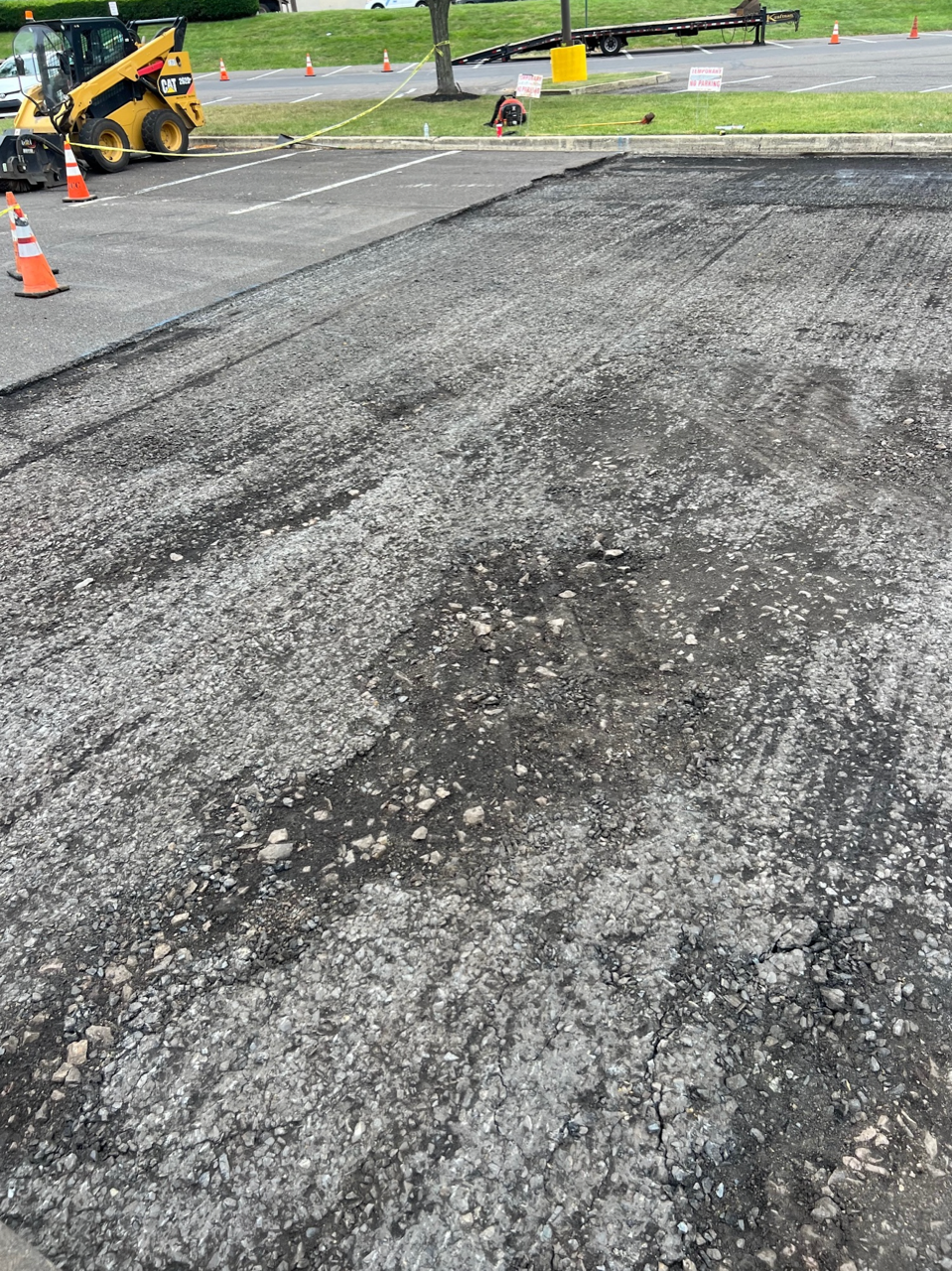
With the plan in place, our crew mobilized to begin complete asphalt demolition. This wasn’t a patch job—we removed the entire worn-out surface to eliminate cracks, dips, and weak spots. That meant stronger performance and a smoother, more uniform finish.

Fresh asphalt was laid with precision, compacted thoroughly, and rolled to a tight, professional surface. It’s that deep, jet-black appearance that tells shoppers the property is cared for—before they even step out of their cars.

Step Three: Line Striping That Does More Than Look Good

Once the asphalt was cured, our next job was layout and striping. While it might seem like the simplest part of the process, effective striping is both a science and an art.

At Morrell Plaza, we designed stall layouts to:

  • Maximize space without creating tight or awkward parking angles
  • Guide traffic flow with clear entry/exit paths
  • Improve safety for both vehicles and pedestrians

Using bright, high-visibility white paint, we striped clean, evenly spaced lines that make parking intuitive and movement smooth.

A Better Experience for Everyone

The finished lot is more than a facelift. It’s a functional, durable upgrade that enhances the shopping experience and reflects well on every business in the plaza. Best of all, it was completed without major disruption to customer access or store operations.

This kind of project is what we do best at APCON: managing complexity behind the scenes, so property managers can stay focused on their tenants and customers.

Ready to Renovate Without the Headache?

If you’re managing a commercial property in the Philadelphia area, you know how hard it is to balance improvements with daily operations. That’s why we specialize in projects like this one—where logistics matter as much as quality.

Let’s talk about how we can upgrade your property’s parking lot without slowing you down. Schedule a walkthrough now, and we’ll help you plan a smooth, staged renovation that delivers long-term value.

7 Reasons to Add Parking Lot Car Stops to Your Property

parking lot repairIf you own or manage a commercial property in Warminster, PA, you know that a clean, organized, and safe parking lot is part of your brand. From the shopping centers along York Road to the busy office complexes near Jacksonville Road, curb appeal and functionality both matter. One of the simplest upgrades you can make that delivers long-term results is installing car stops in your parking lot.

Here are seven reasons why they’re worth considering for your Warminster property.

Key Takeaways

  • Car stops make parking lots safer by keeping vehicles away from walkways, buildings, and pedestrians in busy Warminster areas.
  • Local businesses in Warminster can protect curbs, landscaping, and ADA zones by adding properly placed car stops.
  • Every car stop project should start with layout planning, material choice, local code checks, and smart scheduling for installation.
  • A trusted local contractor like APCON helps Warminster property owners install long-lasting car stops with less hassle and risk.

1. Improves Parking Lot Safety for Drivers and Pedestrians

Car stops act as physical barriers that help prevent vehicles from pulling too far forward, reducing the risk of collisions with buildings, sidewalks, and people.

In high-traffic areas like the Five Points intersection or near Archbishop Wood High School, pedestrian safety is a serious concern.

By guiding vehicles to stop at a safe distance, car stops help protect everyone on your property—from shoppers to employees to delivery drivers.

2. Helps Protect Landscaping and Green Areas

Warminster businesses that invest in curb appeal—like planters, grassy medians, or mulched beds—often find that these areas get damaged by vehicles creeping past the end of a parking stall. We’ve seen it happen in lots near Valley Square and along Street Road.

Installing car stops keeps cars within their designated spaces, protecting your landscaping investment and maintaining the appearance of your property.

3. Prevents Damage to Buildings, Curbs, and Sidewalks

Properties with parking spaces that face storefronts, fences, or walkways are especially vulnerable to vehicle overreach.

At strip malls and office parks along County Line Road, we’ve repaired many cracked curbs and damaged walkways that could’ve been avoided with car stops.

These affordable barriers can save you from expensive repairs caused by bumper-to-wall contact or vehicles damaging property structures.

4. Enhances ADA Compliance and Accessibility

Meeting ADA requirements is about safe, unobstructed paths for mobility devices. Installing car stops can help maintain clear access aisles and prevent vehicles from encroaching into wheelchair ramps or van-accessible spaces.

Properties like medical offices on Mearns Road or Warminster Heights facilities benefit greatly from these small but important additions to their accessibility planning.

5. Supports Organized Traffic Flow in Busy Lots

When parking spaces are clearly defined, drivers make better choices. Car stops help define where each space begins and ends, which is especially important in lots with angled or perpendicular parking.

For Warminster businesses near the SEPTA Warminster Line station or the Johnsville Boulevard industrial area, organizing traffic flow can reduce congestion and confusion during peak hours.

6. Minimizes Liability and Insurance Claims

If a vehicle damages another car, a storefront, or injures a pedestrian on your property, you may be held partially liable. By proactively installing car stops, you reduce the likelihood of these incidents occurring in the first place.

For business owners near Warminster Community Park or along Davisville Road, this small investment can help prevent bigger legal and insurance headaches later on.

7. Improves Overall Appearance and Professionalism

Let’s be honest—parking lots with clearly marked spaces and safety features just look more professional.

Warminster customers, whether they’re pulling into a dentist’s office on Bristol Road or grabbing takeout near the Giant Food Stores plaza, notice when a lot feels maintained and easy to navigate. Car stops contribute to that clean, orderly feel that boosts your property’s perceived value and credibility.

What to Do When You’re Ready to Add Parking Lot Car Stops

Once you decide that car stops are the right fit for your property, it’s important to take the right steps to ensure they’re installed properly and built to last.

Here’s what we recommend for business owners in Warminster.

Evaluate Your Current Lot Layout and Usage

The first step is assessing how your parking lot is currently used.

  • Are there areas where vehicles regularly encroach on sidewalks or green spaces?
  • Are pedestrian walkways often blocked?

In places like the Warminster Shopping Center or near the YMCA, we’ve helped property owners map out trouble spots before any installation begins. Understanding your layout ensures car stops are placed where they’re most effective.

Determine the Right Material and Design for Your Needs

Car stops come in various materials—concrete, rubber, and recycled plastic being the most common. For industrial areas like those near Jacksonville Green Business Park, concrete may offer the durability needed for heavy traffic.

For office buildings or retail lots with lighter use, rubber or plastic car stops can be easier to install and more forgiving on vehicles.

Check Local Codes and Accessibility Requirements

Bucks County and the Township of Warminster have specific zoning and accessibility requirements.

Before installing car stops, you’ll need to confirm spacing, height, and placement rules. APCON is familiar with local codes and ADA standards, and we make sure all our installations meet or exceed the necessary regulations for your property.

Schedule Installation During Low-Traffic Hours

To minimize disruption to your business, we recommend scheduling car stop installation during off-peak hours or weekends.

In areas like the Centennial School District or along busy corridors like Easton Road, timing the work correctly ensures minimal inconvenience to customers and employees. We work with you to create an installation plan that keeps operations running smoothly.

Maintain and Inspect Regularly for Long-Term Performance

Once installed, car stops require occasional inspections to ensure they remain secure and undamaged. Exposure to salt during Bucks County winters or impact from snowplows can loosen or wear them down.

We recommend adding them to your routine lot maintenance schedule, especially after snow removal or during seasonal cleanups.

Make Your Lot Safer and Smarter with Car Stops

A well-maintained parking lot speaks volumes about your business. It shows customers that you care about safety, appearance, and their experience from the moment they pull in.

At Associated Paving Contractors, Inc. (APCON), we specialize in smart, local solutions that improve your property’s value and usability—like installing car stops the right way.

Whether you’re managing a retail plaza on York Road or an office building off Jacksonville Road, we’re here to help you take this small but meaningful step toward a safer, cleaner lot.

Call us today to request a quote or schedule a site assessment.

Frequently Asked Questions

How long does it take to install parking lot car stops?

Most installations take just a few hours, depending on the lot size. We plan around your schedule to avoid business disruption and ensure efficient, same-day service for Warminster properties.

Can car stops be installed on older or cracked asphalt surfaces?

Yes, but surface condition matters. We inspect and repair damaged asphalt beforehand to ensure proper anchoring and long-term durability, especially on older Warminster lots with visible wear and tear.

Do you offer custom options to match our branding or parking layout?

Yes. We offer custom-colored car stops and reflective striping to match existing lines or branding—ideal for retail centers, schools, and medical offices across Warminster.

Are car stops suitable for sloped or uneven parking lots?

Yes, with the right materials. For sloped or uneven surfaces, we use flexible rubber car stops and leveling techniques to ensure safe, secure installation that holds up to daily use.

How Often Should You Get Asphalt Sealcoating for Best Results?

If you’re a property owner in Warminster, PA—whether you’re managing a commercial parking lot near Street Road or a residential driveway off York Road—you know the importance of keeping your asphalt looking clean, smooth, and crack-free.
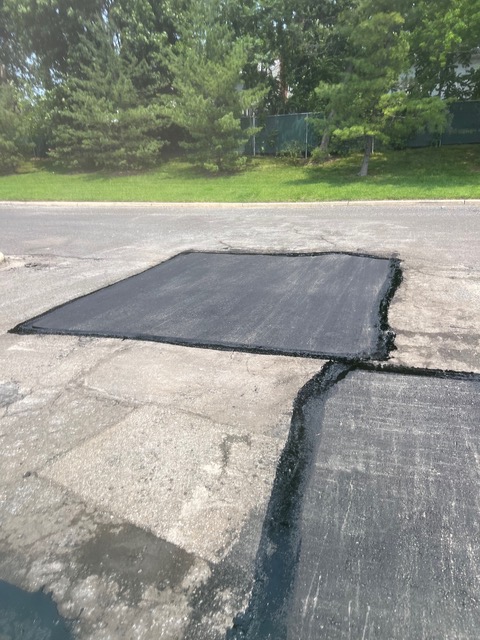
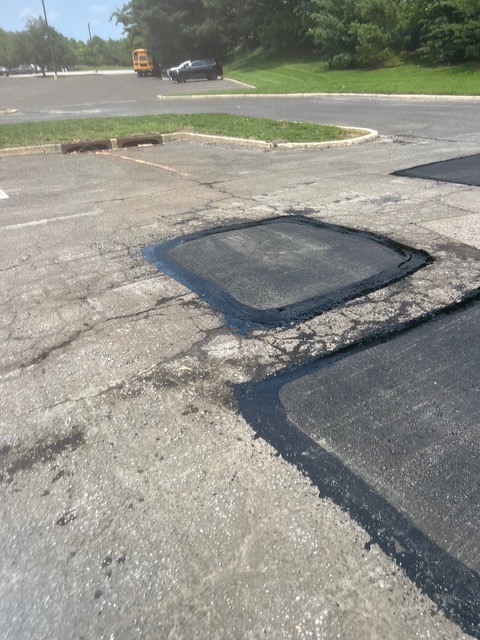
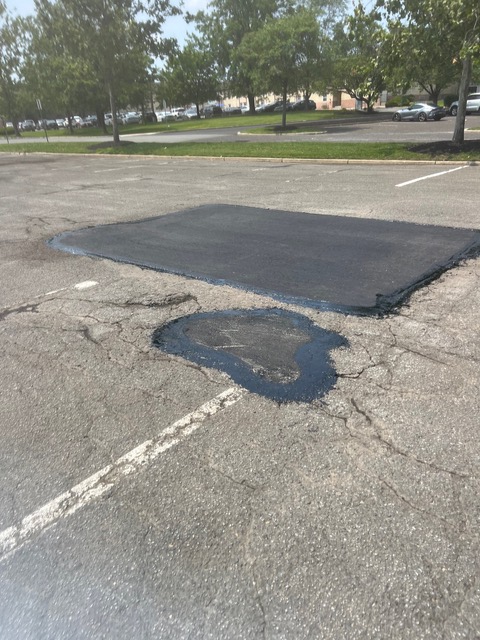
Sealcoating plays a key role in extending the life of your pavement, protecting it from everything from harsh weather to vehicle traffic.

But one question we hear often is: how often should sealcoating actually be done to get the best results? The answer depends on a few key factors and some location-specific considerations.

Below, we break down how often you should plan to get asphalt sealcoating, along with the local conditions that can impact your maintenance schedule.

Key Takeaways

  • The first sealcoating should be applied six to twelve months after paving to protect fresh asphalt in Warminster.
  • Residential driveways and light-use lots benefit from sealcoating every two to three years to prevent weather-related damage.
  • Climate, sunlight, traffic, chemicals, and asphalt age all influence how often sealcoating is needed in Warminster.
  • Sealcoating on the right schedule extends asphalt life, and APCON provides expert service tailored to Warminster conditions.

Recommended Sealcoating Intervals in Warminster, PA

The ideal sealcoating schedule depends on how your asphalt is used and where it’s located in Warminster. Here’s how often you should plan to sealcoat based on the typical conditions we see across the area:

First Sealcoating Application After Initial Paving

In Warminster, we recommend the first sealcoating application be done about 6 to 12 months after new asphalt has been installed.

Fresh pavement needs time to fully cure and release oils, which is especially important in our climate, where temperature swings between seasons can affect curing time.

For example, a newly paved surface in a neighborhood like Hartsville may experience faster surface wear due to proximity to high-traffic areas like Jacksonville Road, making it important not to delay that first protective layer.

Routine Sealcoating Every Two to Three Years

For most residential driveways and standard-use commercial lots around Warminster—especially in areas like the Speedway Shopping Center or near the Warminster Community Park—a good rule of thumb is to sealcoat every two to three years.

This schedule offers a balanced approach: it maintains protection against the region’s fluctuating weather without overapplying, which can lead to a buildup that cracks or peels.

Regular applications keep the surface sealed against oil spills, salt damage, and oxidation, which are common here due to snowy winters and hot, sunny summers.

Annual Sealcoating for High-Traffic Commercial Lots

If you manage a commercial property near the SEPTA Warminster station or along County Line Road, where traffic is heavier and vehicles are constantly moving in and out, annual sealcoating may be necessary.

Lots with higher usage suffer faster surface wear, especially when exposed to delivery trucks, frequent snow plowing, or chemical de-icers in the winter.

These factors can break down the surface much faster, making yearly applications the best way to preserve aesthetics and structural integrity.

Occasional Sealcoating for Low-Traffic or Shaded Properties

Some residential properties—especially those tucked away in quieter parts of Warminster, like near the Five Ponds Golf Club—may not need sealcoating as often.

If your asphalt driveway sees minimal traffic and is mostly shaded (reducing UV damage), sealcoating every four years can still be sufficient.

The cooler and protected microclimate in some of these more tree-covered neighborhoods means the asphalt doesn’t oxidize or crack as quickly, extending the time between applications.

Factors That Influence Sealcoating Frequency in Warminster, PA

Even though general sealcoating timelines can serve as a guide, the right schedule depends on what your pavement goes through here in Warminster. Below are the key factors we consider when recommending how often you should sealcoat your driveway or parking lot.

Seasonal Climate Changes and Freeze-Thaw Cycles

Warminster’s climate brings cold winters with multiple freeze-thaw cycles that can wreak havoc on unsealed pavement.

When water seeps into asphalt and freezes, it expands and creates cracks.

Without a fresh sealcoat, these cracks become wider and deeper over time. This is why properties exposed to more moisture or areas with poor drainage, like those closer to Little Neshaminy Creek, often need sealcoating more frequently than those on higher ground.

Exposure to Sunlight and UV Damage

Homes and businesses along Bristol Road or near open areas like Warminster Community Park face stronger sunlight exposure due to fewer shade trees or surrounding buildings. UV rays gradually break down the surface binders in asphalt, causing it to dry out and crack.

These UV-heavy zones tend to require more frequent sealcoating—sometimes up to every two years—to maintain flexibility and color retention in the surface.

Level of Traffic and Type of Vehicle Use

The amount and type of traffic your asphalt sees can drastically impact wear rates. A quiet residential cul-de-sac near Log College Middle School won’t face the same pressure as a bustling commercial plaza near Easton Road.

If your pavement handles frequent turning, braking, or heavy trucks, you’ll likely need to sealcoat more often to avoid deep rutting and rapid surface degradation.

Use of Chemical Treatments During Snow Removal

In Warminster, snow removal often involves rock salt or chemical de-icers distributed by local plowing services. While necessary, these treatments can degrade unprotected asphalt faster.

If your driveway or lot is plowed and salted often—especially in commercial areas like those near Warminster Heights—you should consider more frequent sealcoating to maintain the surface’s integrity throughout the winter season.

Age and Condition of the Existing Asphalt

Older asphalt surfaces—common in long-established neighborhoods like Rosewood Park or sections of Ivyland—may require a tighter sealcoating schedule.

Once the original pavement begins to show signs of wear, like hairline cracks or fading, it becomes more vulnerable to water penetration and further deterioration. These properties may benefit from sealcoating every one to two years to extend the usable life of the pavement.

Protect Your Pavement the Right Way

Keep your asphalt looking its best—year after year. Sealcoating is a small investment that makes a big difference in how long your asphalt lasts.

Whether you’re dealing with harsh winter runoff near Jacksonville Road or sun-baked driveways in neighborhoods like Speedway, the right sealcoating schedule helps you avoid costly repairs and extend the life of your pavement.

At Associated Paving Contractors, Inc. (APCON), we specialize in sealcoating services that match Warminster’s specific climate and traffic conditions. We don’t just show up and spray—we assess your property, the surrounding environment, and how your pavement is used so we can recommend the right timing and products for your surface.

If your driveway or parking lot is starting to gray, crack, or just look a little tired, it’s probably time to seal. Give us a call today to schedule an on-site assessment or request a quote to see how we can help keep your pavement protected and looking sharp.

Frequently Asked Questions

Can asphalt sealcoating cover existing cracks in my driveway?

Sealcoating cannot repair cracks. At APCON, we clean and fill cracks with quality materials before sealcoating, ensuring your Warminster pavement is both smooth and fully protected against future water penetration and damage.

Is there a specific time of year that’s best for sealcoating in Warminster?

Late spring through early fall offers the best conditions for sealcoating. APCON schedules work during these months to ensure proper curing, maximum durability, and consistent results despite Warminster’s changing seasonal weather patterns.

How long should I stay off my asphalt after sealcoating?

We advise waiting 24 to 48 hours before driving or walking on freshly sealcoated surfaces. APCON provides clear drying-time recommendations tailored to Warminster’s weather, ensuring your asphalt’s protective layer bonds effectively.

Will sealcoating make my pavement slippery?

Fresh sealcoating may feel slick briefly. APCON can add traction-enhancing agents when necessary, giving your Warminster driveway or lot a safer finish without sacrificing the long-term protection sealcoating provides for asphalt surfaces.

Smoother Parking, Better First Impressions: Asphalt Repairs at Brace Road Station

In a busy commercial hub like Cherry Hill, NJ, a parking lot isn’t just pavement—it’s the first impression customers and tenants get when they pull in.

At Brace Road Station, a well-trafficked retail and office complex, years of wear and tear had left the asphalt showing its age. Cracking, potholes, and uneven surfaces were not only affecting curb appeal but also raising safety concerns.

That’s when the property management team reached out to us.

With decades of experience in commercial asphalt repair throughout South Jersey, we knew exactly what was needed to restore both the appearance and functionality of the lot.

Getting Ahead of Bigger Problems

In commercial properties like Brace Road Station, neglected asphalt can quickly lead to more than cosmetic issues. Water infiltration through cracked surfaces accelerates deterioration. Left unchecked, what starts as a small patch job can balloon into full resurfacing—or worse, a complete reconstruction.

By addressing the problem early, the owners made a smart move.

Our goal was to stabilize trouble spots and extend the life of the lot without disrupting business.

Strategic Repairs Across High-Traffic Areas

This wasn’t a one-and-done patch in a corner.

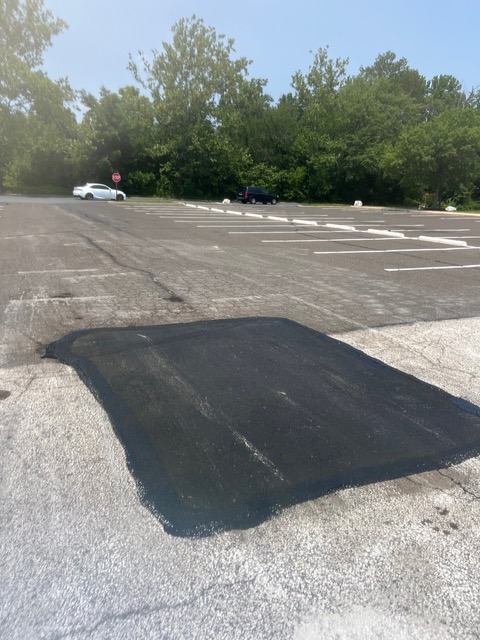
The lot had multiple problem areas, each needing targeted attention. We began by evaluating the condition of the asphalt across the entire property, identifying where base repairs were needed and where surface patching would do the job.

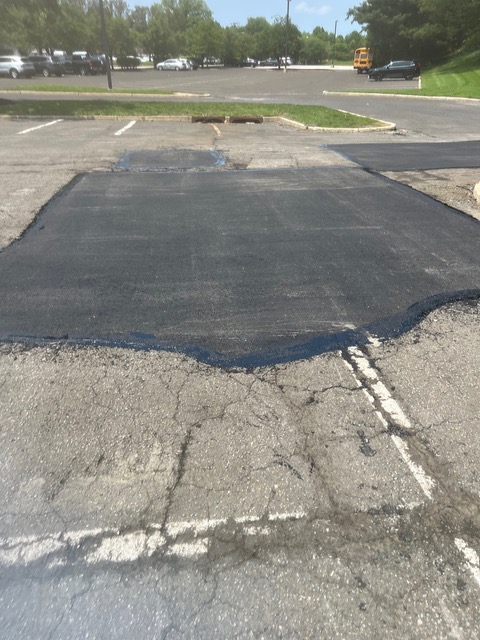
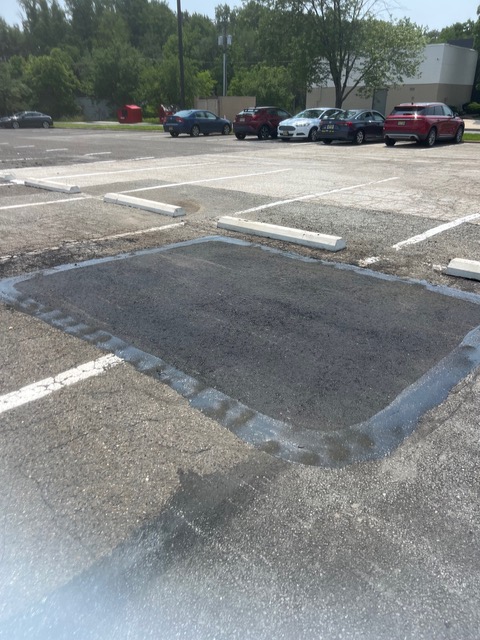
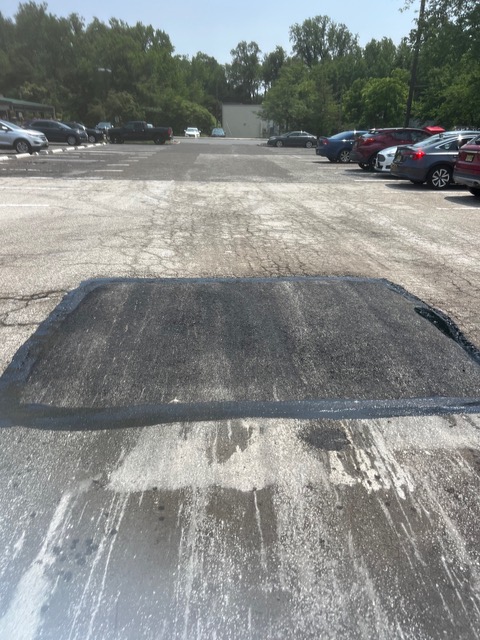
Over several days, we completed asphalt patching in multiple sections, using hot mix asphalt to ensure a durable, seamless bond with the surrounding pavement. From curb lines to central drive lanes, every repair was performed with a focus on long-term integrity and minimal disruption to tenants and visitors.

Thanks to careful planning and clear communication with property management, the repairs were completed efficiently—without interrupting daily operations or causing major inconvenience to the businesses on site.

Clean, Safe, and Ready for Business

By the time we wrapped up, the parking lot at Brace Road Station didn’t just look better.

It performed better. Potholes were eliminated. Uneven surfaces smoothed out. Drainage areas restored. And with a fresh, consistent finish across patchwork zones, the entire lot looked well-maintained and welcoming again.

That’s the value of proactive pavement care.

For property owners in Cherry Hill, taking care of your asphalt isn’t just about maintenance—it’s about protecting your investment and preserving the reputation of your commercial space.

Need Parking Lot Repairs in Cherry Hill?

If your commercial property in Cherry Hill is starting to show signs of pavement damage—cracking, sinking, or potholes—don’t wait until it gets worse.

At Associated Paving Contractors, Inc. (APCON), we’ve been helping local property managers stay ahead of costly repairs with strategic, efficient asphalt solutions.

Call us today or visit our website to schedule a site evaluation.

Let’s keep your property safe, smooth, and business-ready.

"*" indicates required fields

This field is for validation purposes and should be left unchanged.
REQUEST A QUOTE

REQUEST A QUOTE